/Logos/Ardoq/RGB_Ardoq_Logo_Primary_Purple.svg)

As Saudi Arabia accelerates one of the world's most ambitious digital transformation agendas under Vision 2030, Enterprise Architecture has become a strategic capability for government organizations. Modernizing services, improving interoperability, strengthening governance, and making better technology investment decisions all depend on understanding how the enterprise works as a connected whole.
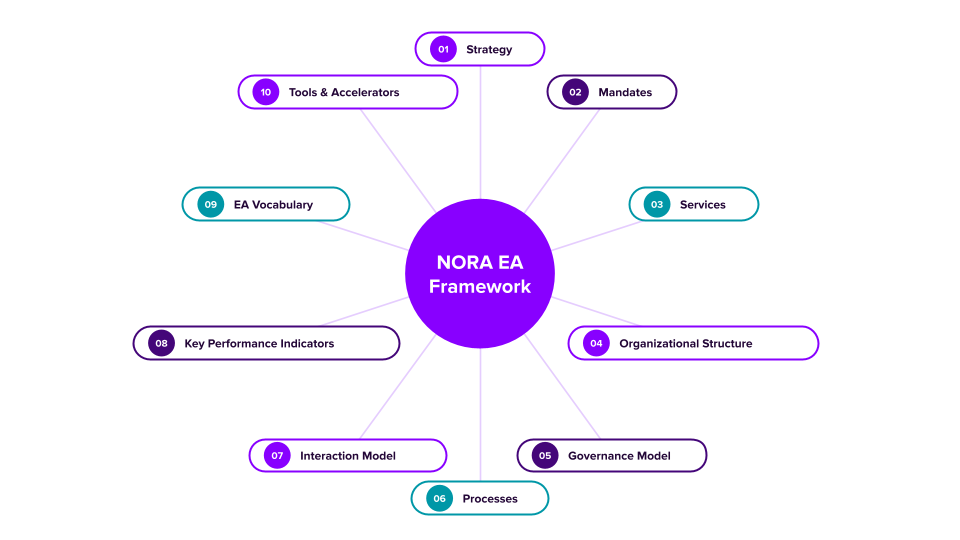
The Digital Government Authority's National Overall Reference Architecture (NORA) provides the framework to help government entities achieve that vision. It establishes a common approach to Enterprise Architecture across government, creating consistency in governance, architecture maturity, and digital transformation.
For many organizations, however, the immediate priority is understandably compliance. New accreditation requirements, governance expectations, and architecture deliverables have focused attention on producing the evidence needed to demonstrate alignment with the framework.
While compliance is essential, it should not become the objective.
The real opportunity is to establish an Enterprise Architecture capability that continues delivering value long after accreditation has been achieved.
Compliance Creates the Starting Point
Every government entity faces the same challenge. Architecture information exists, but it is rarely connected. Business capabilities are documented in one location. Applications are maintained somewhere else. Data models, technology inventories, security information, and process documentation often live across spreadsheets, presentations, Visio diagrams, SharePoint sites, and departmental repositories.
When accreditation activities begin, teams spend months collecting information, validating documentation, interviewing stakeholders, and assembling evidence.
The work is valuable. It also tends to be repeated. Each reporting cycle requires organizations to revisit the same information, reconcile conflicting versions, update architecture artifacts, and recreate reports that quickly become outdated.
The result is significant effort devoted to maintaining documentation rather than improving the enterprise itself.
Enterprise Architecture Was Never Intended to Be Static
The purpose of Enterprise Architecture has always been much larger than producing diagrams. It exists to help leaders understand the relationships between business strategy, capabilities, applications, data, technology, security, and the services delivered to citizens.
When those relationships are visible, organizations can evaluate the impact of change before making investment decisions. They can identify duplication, understand dependencies, prioritize modernization initiatives, strengthen governance, and manage transformation with greater confidence.
That becomes increasingly important as governments adopt AI, modernize legacy systems, expand digital services, and introduce new regulatory requirements.
Architecture should evolve alongside the organization, continuously reflecting reality rather than documenting a single point in time.
A Dynamic, Joint Solution for NORA
This perspective shaped the collaboration between Bruhati and Ardoq.
Rather than adapting a general-purpose Enterprise Architecture platform to support NORA, the joint solution was designed around the framework itself.
The solution combines Ardoq's AI-first Enterprise Architecture platform with Bruhati's implementation methodology, Saudi government expertise, and NORA-specific delivery framework to help organizations establish a living Enterprise Architecture capability that supports governance, accreditation readiness, and continuous improvement.
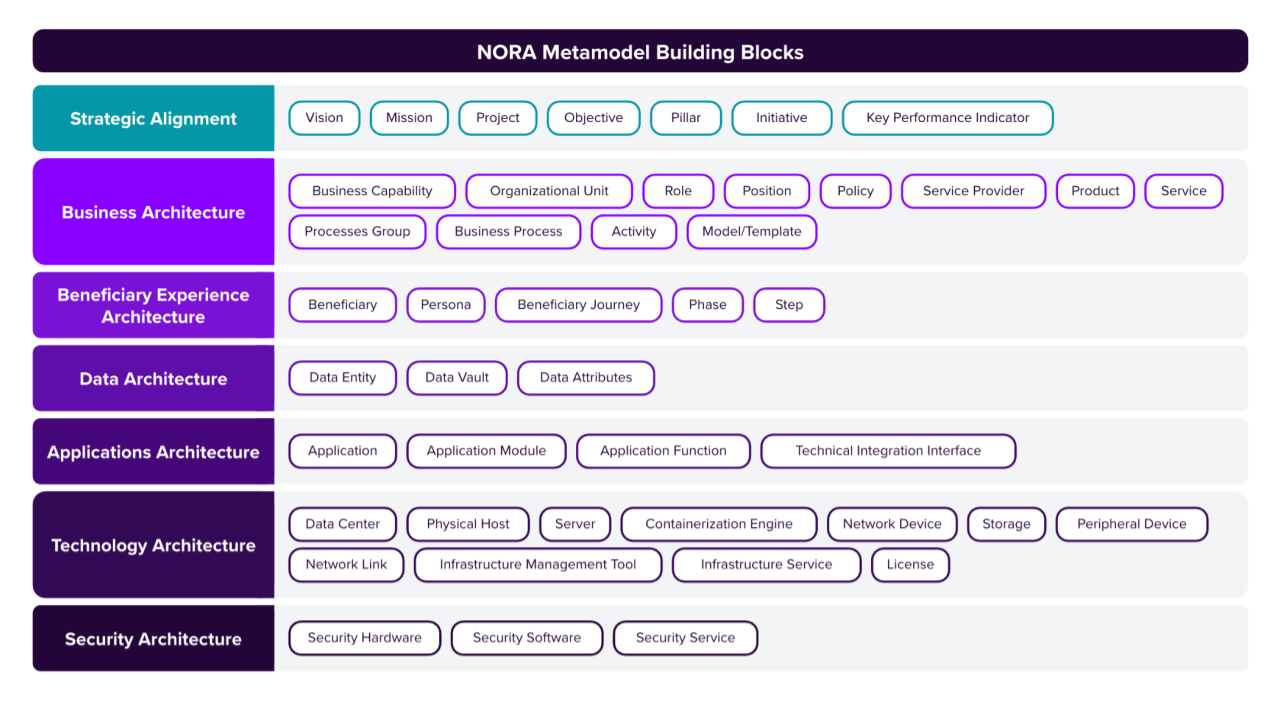 Pre-configured NORA metamodels, governance structures, architecture artifacts, implementation accelerators, and reporting capabilities enable organizations to establish a connected architecture repository in weeks rather than beginning with a blank slate. Instead of producing static documentation, architecture becomes an operational asset that supports ongoing governance and decision-making.
Global Technology, Local Expertise, Purpose-Built for Saudi Government
Enterprise Architecture in government presents different challenges from Enterprise Architecture in the commercial sector. Organizations must demonstrate governance, transparency, traceability, and alignment with nationally defined standards while supporting diverse stakeholders across multiple domains.
They also need local expertise that understands the regulatory environment, accreditation expectations, and implementation realities unique to Saudi Arabia.
By combining global Enterprise Architecture technology with Bruhati's delivery capability, the joint solution provides organizations with both an enterprise-grade platform and a local implementation partner that understands how NORA is applied in practice. Recognized as Ardoq's Services Implementation Partner of the Year for three consecutive years, Bruhati has delivered more than 30 Ardoq implementations and has practical experience implementing NORA accelerators, Enterprise Architecture governance, metamodels, operating models, and managed services.
Bruhati has supported major Saudi government organizations through their NORA accreditation journeys, with Enterprise Architecture work recognized by The Open Group in alignment with TOGAF. This practical implementation experience informs the delivery approach behind the joint solution.
This combination enables government entities to accelerate implementation while establishing a sustainable capability that can continue evolving alongside future Digital Government Authority requirements.
Value Beyond Accreditation: Decision Intelligence for Future Digital Transformation Initiatives
Accreditation is an important milestone. It demonstrates that an organization has established the governance, architecture, and evidence expected under the NORA framework.
The greatest value, however, comes after accreditation. Once Enterprise Architecture becomes part of the organization's operating model, the same connected repository evolves from supporting accreditation readiness into enabling AI governance, application modernization, cloud transformation, technology investment planning, cybersecurity initiatives, and future digital transformation programs.
The architecture that supports compliance today becomes the intelligence that guides tomorrow's decisions. That is ultimately the opportunity created by NORA.
Not simply to standardize Enterprise Architecture across government, but to help government entities establish the capabilities needed to sustain transformation for years to come.
Where to Begin With NORA
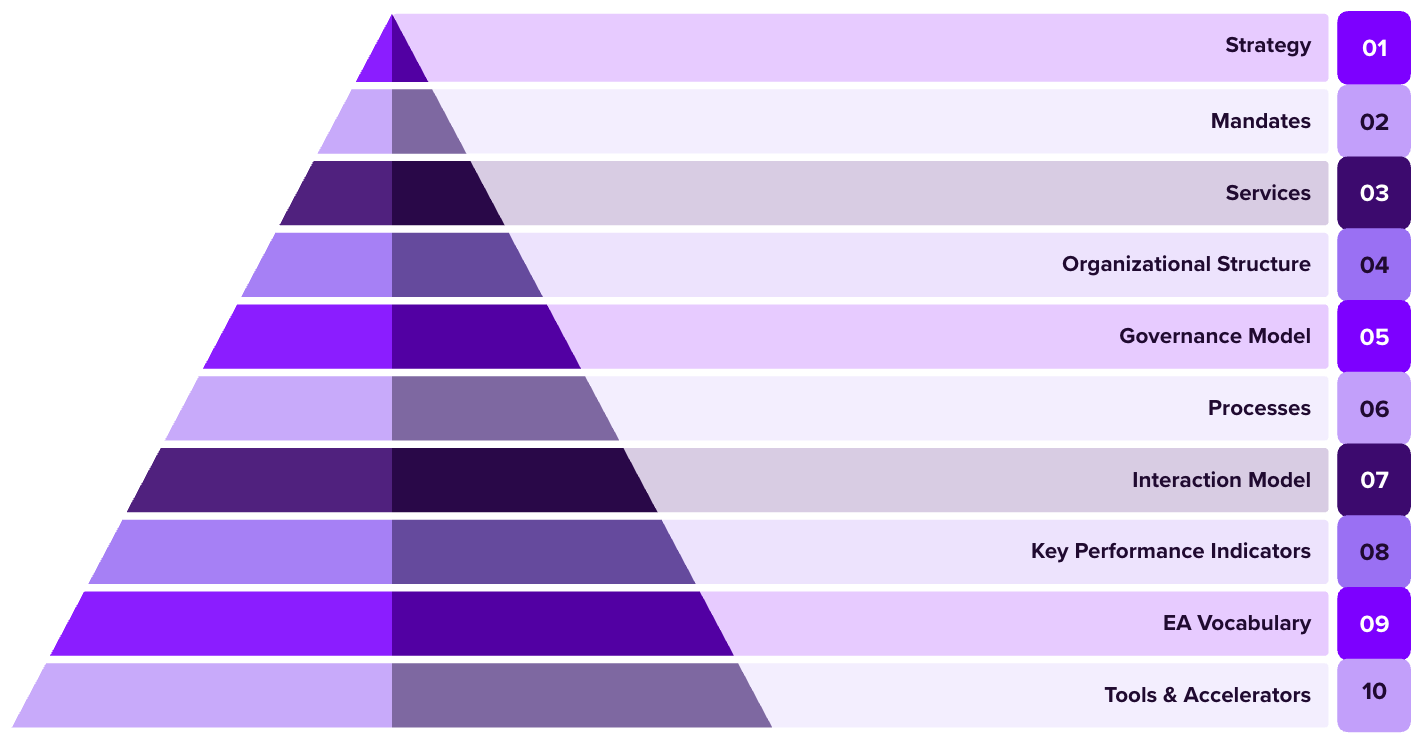
No two organizations begin their NORA journey from the same place. Some are preparing for their first accreditation assessment. Others have established Enterprise Architecture practices but are looking to improve governance, strengthen traceability, or replace disconnected documentation with a living architecture repository.
For that reason, the Bruhati and Ardoq NORA Solution is designed to support organizations at every stage of Enterprise Architecture maturity.
Organizations looking to understand their current state can begin with a NORA Readiness Assessment, providing a clear view of architecture maturity, compliance gaps, and prioritized recommendations for moving forward.
Those evaluating technology can start with a Proof of Concept, demonstrating how a NORA-native Enterprise Architecture platform can centralize architecture information, automate evidence generation, and advance future transformation initiatives.
For organizations ready to operationalize Enterprise Architecture, implementation services establish a fully configured NORA solution, governance framework, and architecture operating model tailored to the organization's needs.
As Enterprise Architecture capabilities mature, managed services and ongoing advisory support help organizations continuously improve architecture maturity, maintain accreditation readiness, and support future transformation initiatives.
Whatever the starting point, the objective remains the same: moving from accreditation readiness to a sustainable Enterprise Architecture operating model that continues delivering value well beyond compliance.
See the NORA Solution in Action
Whether your organization is preparing for NORA, modernizing its Enterprise Architecture practice, or exploring how Enterprise Architecture can better support governance and digital transformation, Bruhati and Ardoq can help.
Visit the Bruhati x Ardoq NORA Solution page to learn more about the solution, explore available service offerings, and discover how organizations across the Kingdom are building Enterprise Architecture capabilities designed for long-term success.
Explore the Bruhati × Ardoq NORA Solution to book a NORA readiness assessment or request a demo of the NORA accelerator.

/Logos/Ardoq/RGB_Ardoq_Logo_Stacked_White_Monochrome%201.png?width=80&height=77&name=RGB_Ardoq_Logo_Stacked_White_Monochrome%201.png)