You can’t control what you don’t know.
See clearly, simplify purposefully, and spend wisely.
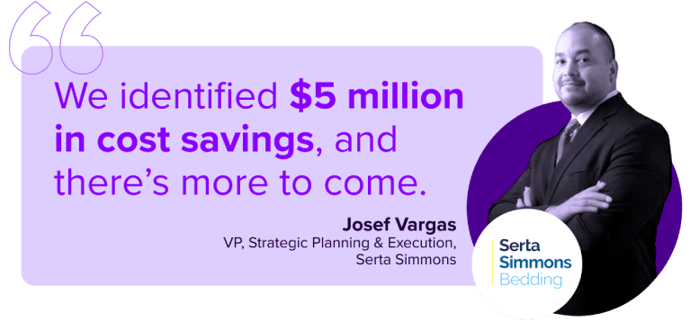
Am I Alone?
IT organizations everywhere are under pressure to cut spend, prove value, and improve operational efficiency.
From duplicate apps to shadow IT, most enterprises are sitting on vital savings they can’t yet see.
Why Enterprise Architects Need to Talk Money
Bottom-line cost cutting isn’t the answer. With EA, there is a better way.
Enterprise Architects are uniquely positioned to be the crucial bridge between a financial perspective and an operational one.
Why Enterprise Architects Need to Talk Money
Executive leadership sits up and listens when EAs are able to speak the language of business value.
By identifying and eliminating redundant applications and wasted spend, EAs move beyond tactical planning and become valued, trusted advisors.
Why Enterprise Architects Need to Talk Money
It’s not about quick-win, cost-cutting but delivering a sustainable, insight-driven approach to IT cost management.
EAs can continuously monitor the IT landscape, track the impact of changes, and identify new opportunities for optimization. This transforms a reactive exercise into a proactive strategy.
On-demand webinars, solutions, downloadable guides, and more.
VIDEO
0:54
ON-DEMAND WEBINAR
20 Jan 2025
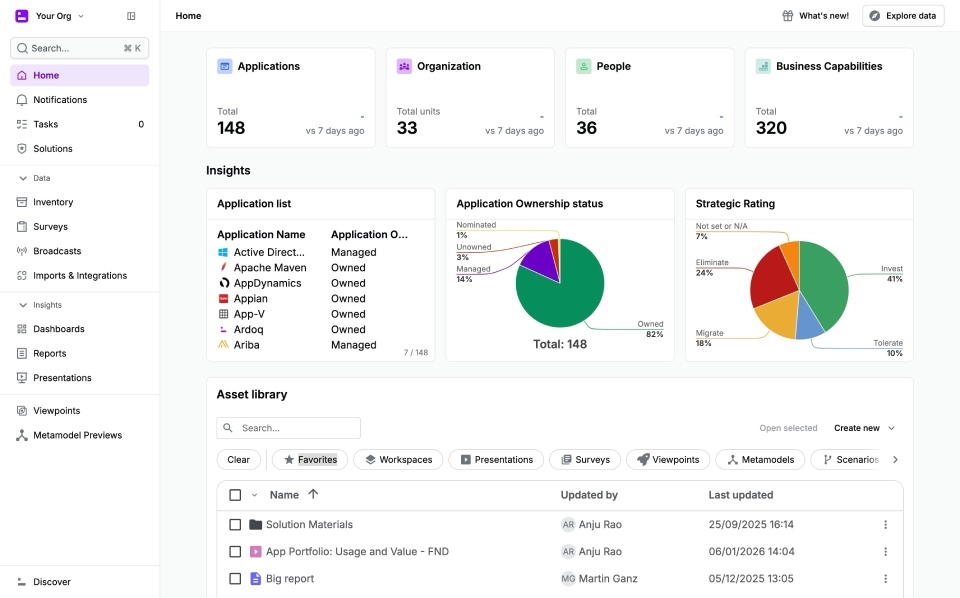
Enterprise Architecture (EA) provides a clear, data-driven map of the entire IT landscape. This visibility is key. It helps pinpoint exactly where money is being spent on technology, identifying redundant applications, underused software licenses, and outdated systems.
By understanding these connections, organizations can make informed decisions to eliminate waste, consolidate resources, and optimize spending—turning EA into a direct contributor to the bottom line.
While Enterprise Architecture delivers long-term strategic value, it can also provide quick wins. With a platform like Ardoq, it’s possible to rapidly identify overlapping software or applications that aren't delivering business value.
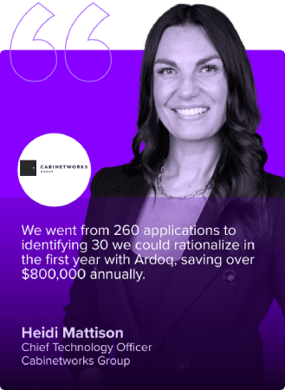
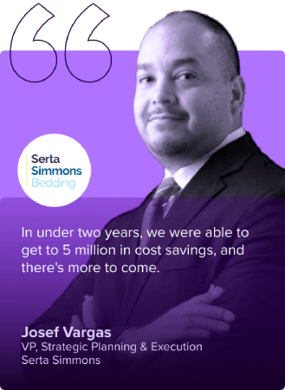
Application Portfolio Management or Application Rationalization often reveals immediate opportunities to decommission systems and reduce license fees, delivering a return on investment in months, not years. Read our customer success stories to see how modern brands are saving millions with the help of the Ardoq platform.
The key is to connect EA to business outcomes. Instead of focusing on technical diagrams, present the enterprise architecture as a source of business intelligence. Use it to answer critical questions like:
Which applications support our most critical business capabilities?
What is the total cost of ownership for our key services?
Where are the redundancies in our software portfolio?
By framing the insights in terms of cost, risk, and efficiency, the value of Enterprise Architecture becomes clear to business leaders. It’s not about drawing diagrams; it’s about making smarter, data-driven decisions.
IT cost reduction is a short-term tactic, often focused on immediate budget cuts like slashing spending on a high-cost system. While sometimes necessary, this can accidentally harm business capabilities.
IT cost optimization, on the other hand, is a continuous strategy. It’s about re-evaluating spending to ensure every dollar is aligned with long-term business goals. It focuses on increasing efficiency and eliminating waste to free up funds for innovation and growth, ensuring the organization runs as effectively as possible.
Technical debt, or the implied cost of rework caused by choosing an easy solution now instead of using a better approach that would take longer, drains resources. Outdated systems are often expensive to maintain, difficult to secure, and hold back innovation. A clear view of the enterprise architecture helps to:
Identify and prioritize the most critical technical debt
Create a roadmap for modernizing or retiring legacy systems
Free up the budget and resources spent on maintaining outdated technology
Tackling technical debt isn't just a technical exercise; it's a direct investment in future efficiency and cost savings.
Learn more about Ardoq's solution for Technical Debt Management.
For most organizations, Application Rationalization is the best starting point. It’s the process of evaluating the entire application portfolio to decide which applications to keep, replace, retire, or consolidate. This initiative is highly effective because most companies have significant overlap in their software. It’s a practical, high-impact way to achieve significant savings quickly while simplifying the IT landscape for the long term.
Ardoq offers an out-of-the-box best practice solution for Application Rationalization to speed up the process and time to savings.
Keeping data current is a common challenge, but it doesn't have to be a manual effort. Modern EA platforms like Ardoq solve this with automation and crowdsourcing. By integrating with existing IT and business systems, data can be pulled in and updated automatically.
In addition, Ardoq's collaboration and data collection like Surveys features allow application owners across the organization to contribute and verify information. This ensures that the data is not only current but also accurate, providing a reliable foundation for decision-making.
We Value Your Business and Respect Your Privacy
Protection of customer data is critical to Ardoq, and information security is considered a high priority by senior management. Read on to learn more about Ardoq’s approach to safeguarding the confidentiality, integrity and availability of information stored and processed by the Ardoq Cloud platform.
Information Security