/Logos/Ardoq/RGB_Ardoq_Logo_Primary_Purple.svg)
















.png)



.png)



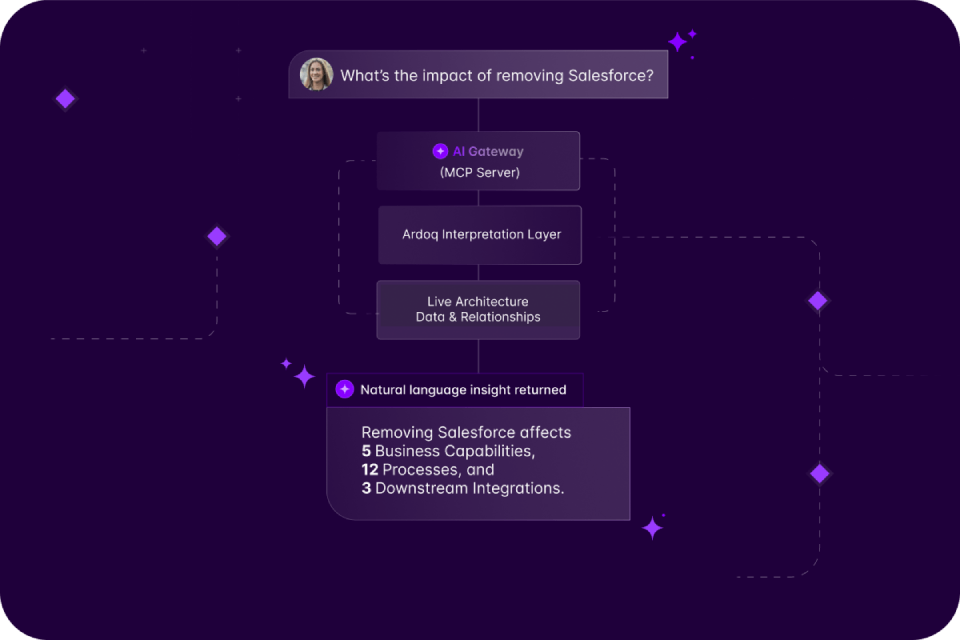
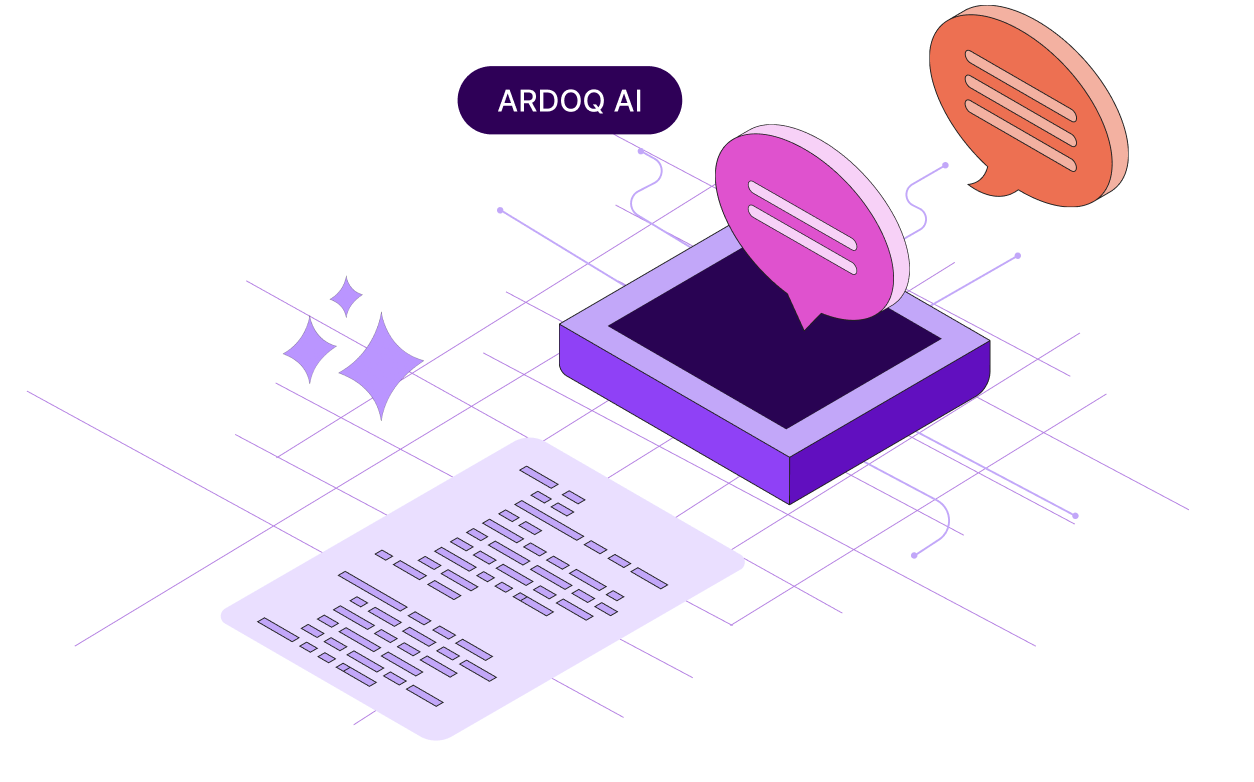
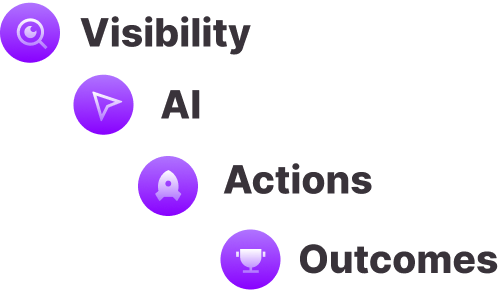
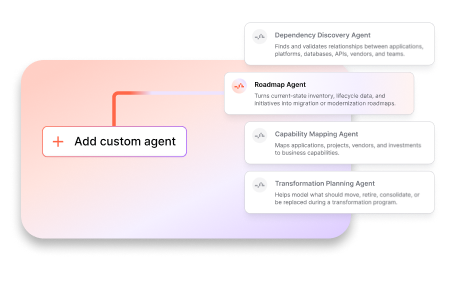
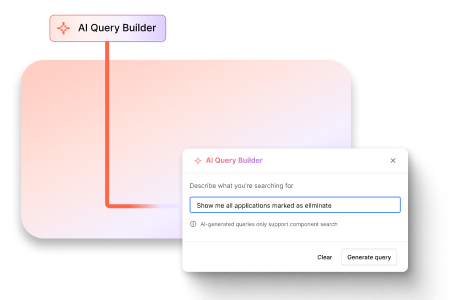
The knowledge graph provides memory, continuity, and structural truth, enriched over time with operational and business data feeds. Our AI builds on that foundation to enable exploration, inference, analysis, and increasingly agent-driven techniques that help organizations reason through complexity, not just visualize it. Automation, reasoning, and governance exist in one system, not as separate layers.
The result is not a chatbot for architects. It is an intelligent decision layer for the enterprise — improving prioritization, clarifying trade-offs, modeling future alternatives, and guiding transformation with explainable, trusted AI outputs grounded in live data and human expertise.
Ardoq was built for this shift. From day one, we designed a graph-native, data-first platform capable of representing how applications, processes, infrastructure, people, costs, policies, initiatives (and now AI systems) connect. But in the AI era, EA data must evolve into enterprise ontology — richer in semantics, explicit in relationships, and capable of supporting inference over time. Static diagrams and traditional EA metamodels are not enough. AI requires fresh, connected, contextual information grounded in the real structure of the enterprise.
Without a proper context graph-based grounding layer, LLM models can hallucinate and give generic, non-actionable answers. LLMs lack enterprise causality. They do not inherently understand how an application change affects downstream capabilities, cost structures, regulatory exposure, or strategic objectives. That is why Ardoq combines a live enterprise knowledge graph combined with EA-practice specific instructions to provide solid context grounding for LLM models. We use generative AI where judgment and ambiguity exist, and deterministic logic where precision is required.
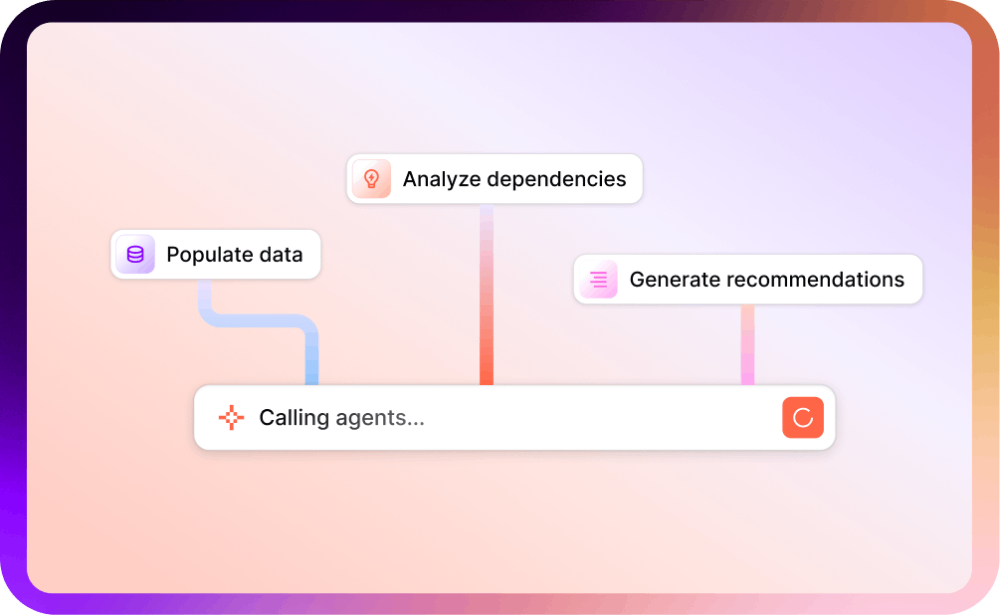
Ardoq is building toward autonomous workflows — but autonomy is never detached from architecture. It operates within enterprise-defined permissions, policies, and structural constraints encoded in the model itself.
Today, AI-generated outputs are draft-based, permission-aware, and reviewable. Over time, we will enable more guided execution — but governance scales with autonomy. Oversight is architectural, not manual.
Autonomy in Ardoq is structured, explainable, and policy-aware.
No. Ardoq’s value is not the language model, it is the reasoning layer around it.
We combine:
- A live enterprise knowledge graph
- Schema-aware, permission-filtered retrieval
- Deterministic logic where precision is required
- Advanced orchestration
- Governance enforcement before and after inference
LLMs provide language fluency. Ardoq provides enterprise context and structural intelligence. Without that grounding, generative models hallucinate. With it, they become decision-support systems.
No. We do not train proprietary foundation models. Instead, we use a model-agnostic architecture that selects the best model for the task, optimizing for cost, latency, privacy, and performance.
Our IP is not in the model. It is in:
- The enterprise ontology
- The graph structure
- The reasoning and orchestration layer
- Governance and constraint enforcement
This ensures we remain resilient as the AI landscape evolves. We are not tied to a single vendor or ecosystem.
We do not charge extra for AI features! Ardoq is the only EA leader delivering flexible, embedded AI without consumption caps, hidden fees, or ecosystem lock-in. Competitors either:
- Charge extra for AI
- Restrict usage via caps
- Dilute AI value realized by narrow ecosystem focus
- Overlapping features that create complexity
Ardoq has no hidden AI pricing, no usage caps on AI, and no lock-ins. We build AI for all ecosystems, compounded by graph-native AI synergies that drive accuracy, context, and faster decision intelligence that our competitors can’t match.
We recognize that AI expectations and spending currently outpace enterprise readiness. Models change. Costs fluctuate. Vendors consolidate. Ardoq is architected for volatility:
- Model-agnostic infrastructure
- Support for external AI via MCP
- Hybrid neuro-symbolic reasoning
- Governance-first controls
- Deterministic validation where required
We design for durability, not hype.
Ardoq’s AI Gateway (MCP Server) exposes architecture data in a structured, schema-aware, and permission-controlled way. It enables external AI tools to reason over enterprise context, not scrape text.
MCP provides:
- Secure, read-only access
- Role-based permission enforcement
- Structured graph traversal
- Context-rich reasoning inputs
This allows AI to answer complex questions such as:
“Which initiatives align to our strategic objectives, and what would be the downstream impact if delayed?”
The difference is grounding. MCP enables structured enterprise reasoning, not generic Q&A.
We are building toward architecture-governed autonomy. Our roadmap moves from:
- Insight generation
- To reasoning and scenario simulation
- To guided orchestration
- And eventually to autonomous workflows operating within enterprise constraints
We are not chasing uncontrolled agents.
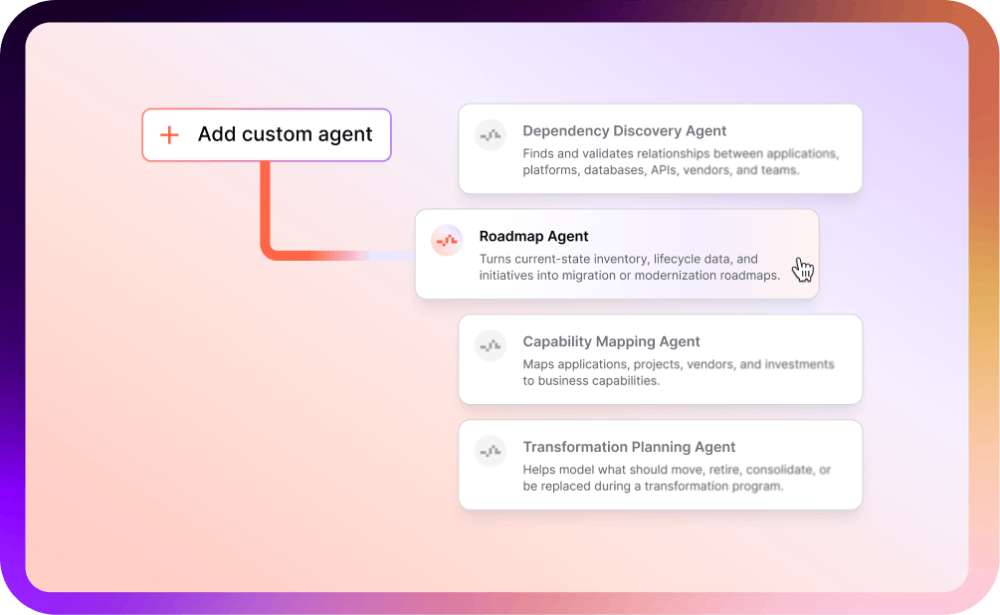
We are designing agents that operate within structured ontology, governance boundaries, and decision workflows.
The goal is not novelty. The goal is improved prioritization and execution quality.
Check out what we are building actively at www.ardoq.com/ai-labs
You can read more at Ardoq AI: Security & Architecture FAQ and you can get a clear overview of Ardoq’s AI capabilities with a catalogue of links to further KBs, demo videos, blogs etc here: AI Capabilities, Controls & FAQs Page
/Logos/Ardoq/RGB_Ardoq_Logo_Stacked_White_Monochrome%201.png?width=80&height=77&name=RGB_Ardoq_Logo_Stacked_White_Monochrome%201.png)