/Logos/Ardoq/RGB_Ardoq_Logo_Primary_Purple.svg)
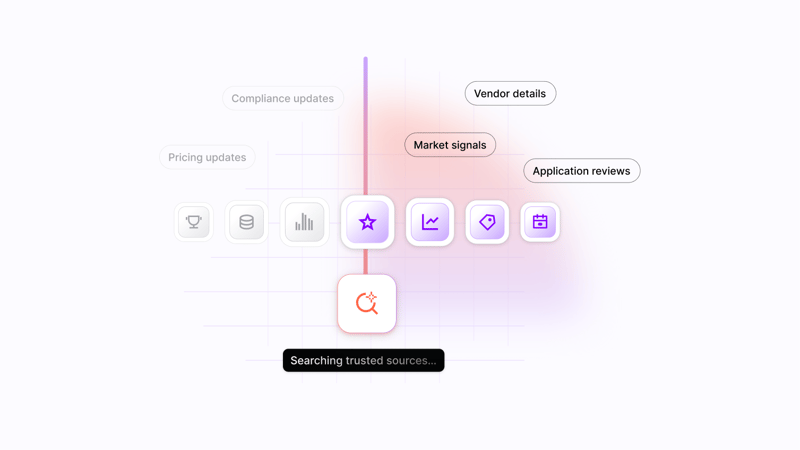
Ardoq's AI Assistant can now search the live web (available as an open beta feature).
Ask whether a vendor has been acquired, whether a product is still supported, or which compliance changes affect a technology, and the Assistant retrieves the answer from the public web and returns it with citations, in the same place the architecture already lives. No browser tab, no copy-and-paste, no context lost on the way back.
AI Web Search is available now in the Ardoq AI Assistant. Here's what it changes.
The Problem: Your Architecture Is Always a Little Out of Date
A vendor gets acquired on a Tuesday. A support end date passes quietly in March. A regulation changes how an entire category of applications has to be governed.
None of it shows up in the architecture model because the model still reflects exactly what was true the day it was last updated, and every decision built on top of it inherits that lag. By the time anyone notices, the strategy the model was supposed to support has already moved on without it.
This is a currency problem that no amount of documentation discipline can fix, because the information that goes stale lives entirely outside the organization.
Research Is the Tax Enterprise Architects Pay Twice
Most Enterprise Architects already do this work, usually in a browser tab.
Someone has to open a search engine, check whether a vendor is still independent, skim a support matrix, find the analyst take, then copy the useful parts back into the architecture tool by hand. Multiply that by a portfolio of several hundred applications, and it stops being a task and starts being a second job.
The tax gets paid twice. Once in the hours spent gathering, and again in the drift that sets in the moment gathering stops. Manual research is a snapshot. Architecture shouldn't be.
What Ardoq AI Web Search Actually Does
AI Web Search gives Ardoq's AI Assistant the ability to query the live web and return answers grounded in current information rather than a training data cutoff.
In practice, that means asking the questions Enterprise Architects were already going to ask, without leaving the platform:
- Has this vendor been acquired, and by whom?
- Is this product still supported, and until when?
- Which compliance changes affect this technology?
- What are practitioners actually saying about this application?
The Assistant searches, reads, and answers in context. It knows which application is being asked about, what it connects to, and which capabilities depend on it, because that context comes from the graph the answer lands in.
Why Our AI Web Search Answers Can Be Trusted
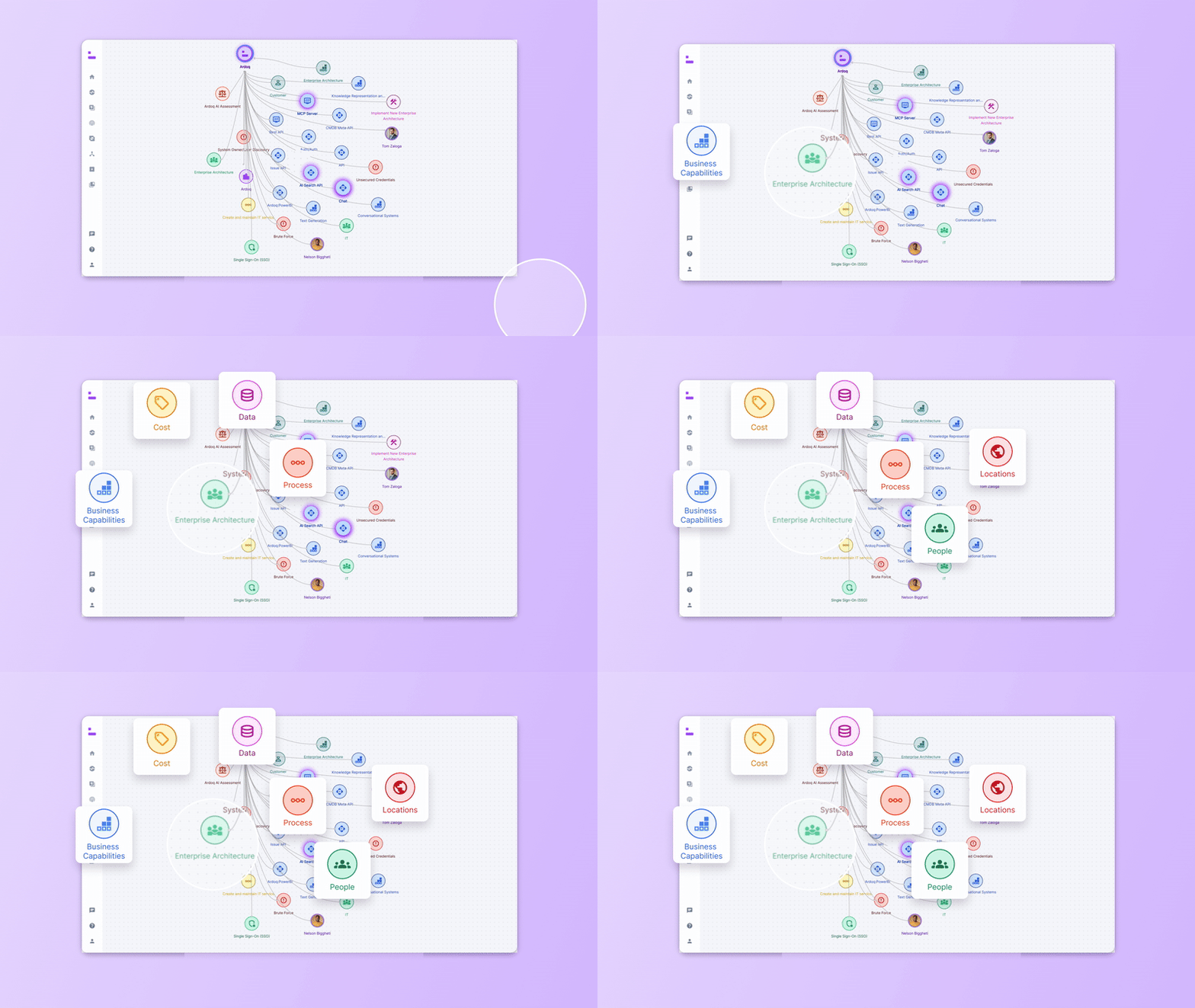
Speed is the easy part. Trust is what makes live web data usable in architecture work, and there are four deliberate design decisions behind it.
- Every answer is cited. Web-sourced answers carry numbered inline citations linked back to the source. Nothing has to be taken on faith; everything can be traced back to where it came from.
- Updates are staged, never applied autonomously. The AI Assistant can read a field such as an application's support end date, find the current value on the web, and stage the change for review. You still decide what enters the model.
- It's off by default and opt-in per conversation. Web search doesn't run in the background or quietly widen what the Assistant reaches for. It's turned on for a specific conversation and queries only public web content, within existing permissions.
- Shallow by default, deep on request. Most questions can be resolved with a quick search. When the question warrants it, the Assistant can be asked to research in depth, reading full pages across multiple sources.
The combination of these four design decisions ensures that the information used is reliable, easily verified, and keeps architects in full control of changes.
Three Ways Teams Are Putting It to Work
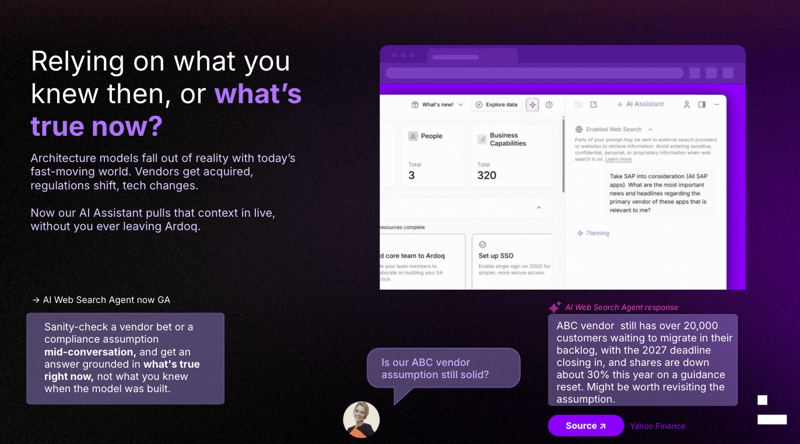
1. Vendor Assessment: Validating the Portfolio Against Reality
The question behind it: does our architecture still reflect the current state of our vendor landscape?
Vendor risk rarely announces itself. Acquisitions, funding events, product consolidations, and shifting support commitments all move faster than the review cycle that's supposed to catch them. A rationalization decision made against six-month-old assumptions is a decision made against a vendor that may no longer exist in the same form.
AI Web Search surfaces live vendor data, product updates, financial health signals, and acquisition news directly against the applications in the model. An architect reviewing a portfolio can validate the assumptions underneath it in the same session, rather than scheduling the research for later and deciding without it now.
2. Technology Strategy: Building Roadmaps on Live Signals
The question behind it: how do we keep the future-state architecture aligned with where the market is actually heading?
Target-state architecture is a bet on the direction of the market. Those bets usually get made once a year, informed by whatever research happened to be within reach at the time, then defended for twelve months while the market keeps moving.
Pulling current technology trends, competitive intelligence, and market signals into the architecture context changes the cadence. Roadmap and investment decisions can be pressure-tested against what's true this quarter, not what was true when the planning cycle opened. The research stops being an event and becomes something the model can be continuously checked against.
3. Compliance Awareness: Catching What Changes Around You
The question behind it: how do we make sure the team knows about new regulations affecting our technology stack?
Regulatory change is the clearest case for live context. Requirements land on a schedule nobody controls, and the cost of finding out late is measured in remediation programs rather than hours.
AI Web Search surfaces regulatory updates, compliance news, and governance requirements relevant to the technologies already in the model. For teams in financial services, healthcare, energy, and the public sector, that turns a dedicated monitoring effort into something the architecture practice does as a matter of course.
Why AI Web Search Within Your Architecture Reduces Friction, Increases Reliability, and Speeds Up Updates
Plenty of tools can search the web. Very few can do anything useful with the result.
General-purpose assistants return an answer to a browser window. A person then has to work out which applications it affects, which capabilities depend on those applications, who owns them, and what the answer means for the roadmap. The search itself may take seconds, but the translation takes the afternoon.
Ardoq's advantage isn't just retrieval. It's that the retrieval happens where the architecture already lives. Every answer arrives attached to the applications, dependencies, and decisions it affects, because the graph provides the context in which the question is asked.
Architecture You Can Trust, Grounded in the Present
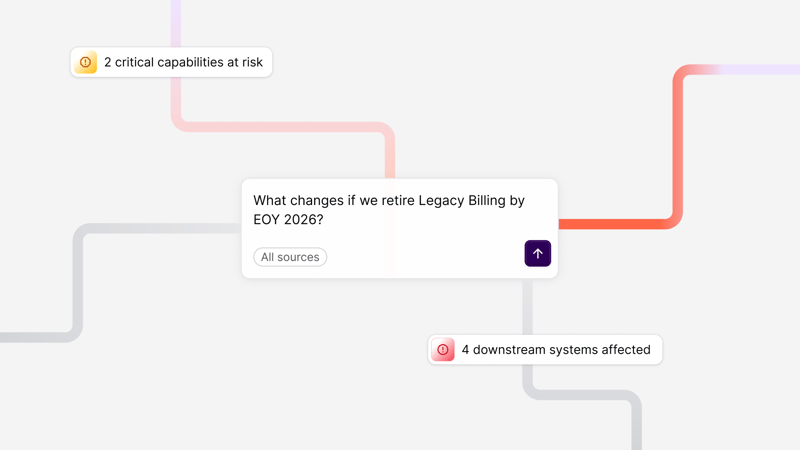
Architecture teams have always been asked to make decisions about the future using a picture of the past. AI Web Search narrows that distance.
Models that reflect the current market. Answers that can be checked. Suggested updates that a human still approves. Less time spent sourcing facts, and more spent on the strategic guidance only an Enterprise Architect can provide.
AI Web Search is available now in the Ardoq AI Assistant.

/Logos/Ardoq/RGB_Ardoq_Logo_Stacked_White_Monochrome%201.png?width=80&height=77&name=RGB_Ardoq_Logo_Stacked_White_Monochrome%201.png)