An architect asks their AI assistant a reasonable question: what happens to the business if we decommission this application? The answer arrives in seconds, neatly formatted, with a cost saving, a dependency count, and a compliance summary. It reads like it was written by someone who knows the estate. However, one of the numbers is wrong, and nothing on the screen says which.
That risky gap between confident and correct is the problem neurosymbolic AI addresses. This post explains it in plain English and shows why it matters in Enterprise Architecture use cases.
What Is Neurosymbolic AI?
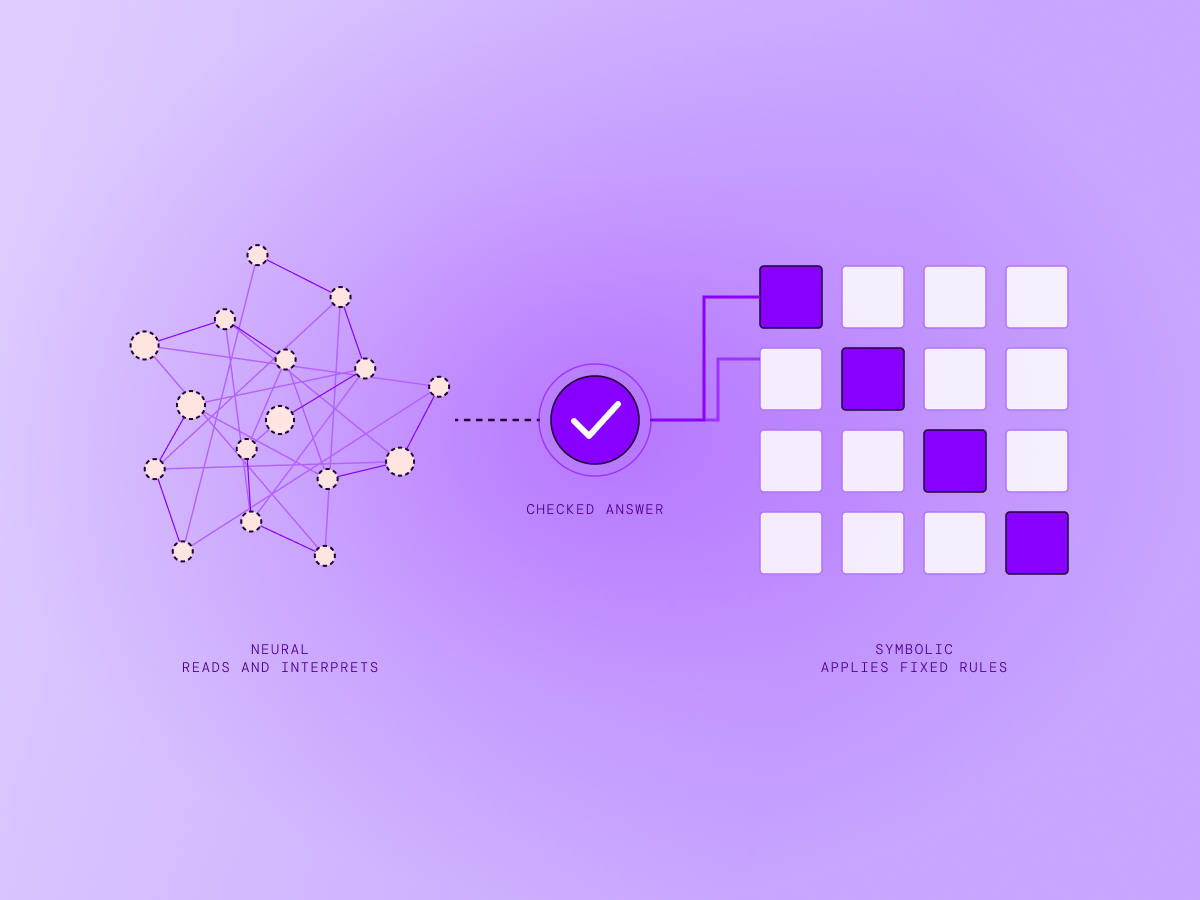
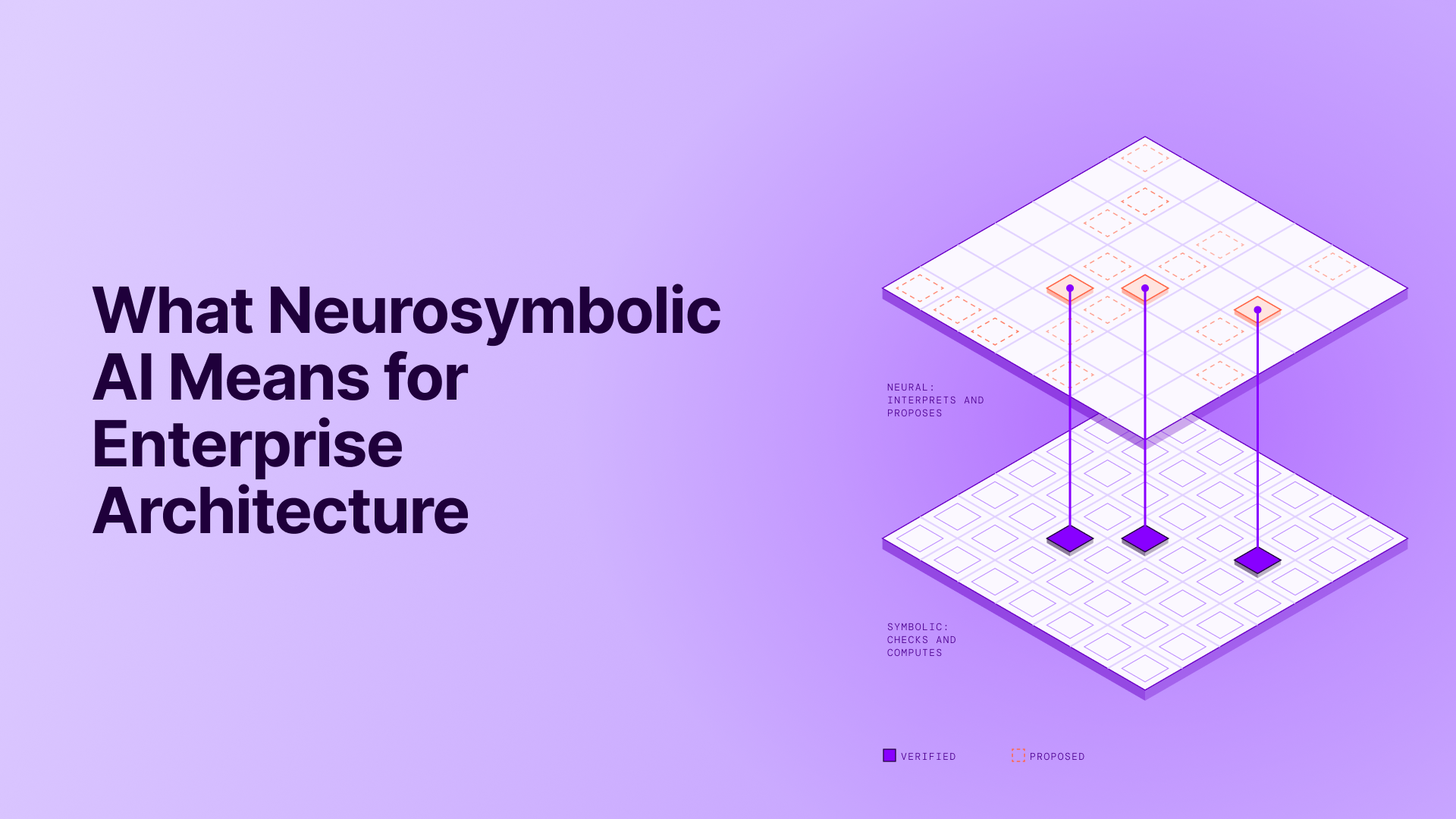
Neurosymbolic AI is a way of building AI systems that combines two different kinds of intelligence: neural and symbolic. The neural half learns from data and handles language, pattern recognition, and ambiguity. The symbolic half follows explicit rules, logic, and code, and gives the same answer every time it receives the same input.
A large language model (LLM) is the neural half most people already know. It reads a question, works out what is being asked, and writes a fluent response. What it does not do reliably is arithmetic, strict logic, or following a rule exactly as written, because it produces the most likely next words rather than a calculated result. The symbolic half has the opposite profile. It cannot interpret a messy question, but it can filter, sum, and check a constraint without getting tired or creative.
Put them together, and the roles split cleanly. Think of a gifted writer paired with a strict accountant. The writer interprets the request and drafts the answer. The accountant recomputes every figure and checks the draft against the rules before anything goes out. Each one covers the other's weak spot.
Where Neurosymbolic AI Comes From
Symbolic AI dominated the field's first few decades. From the late 1950s through the 1980s, researchers built systems out of explicit rules, formal logic, and knowledge written down by experts. They were precise and easy to explain, but they broke whenever reality didn't match the rules someone had anticipated.
Neural networks were born in the same decade but spent long stretches on the sidelines. Instead of being told the rules, they learned patterns from huge numbers of examples, and once computing power caught up, that approach produced today's language models, along with their habit of being fluent and occasionally wrong. Neurosymbolic AI aims to combine the two, so the learned flexibility of one and the checked precision of the other work inside the same system.
Why Language Models Struggle With Multi-Step Math
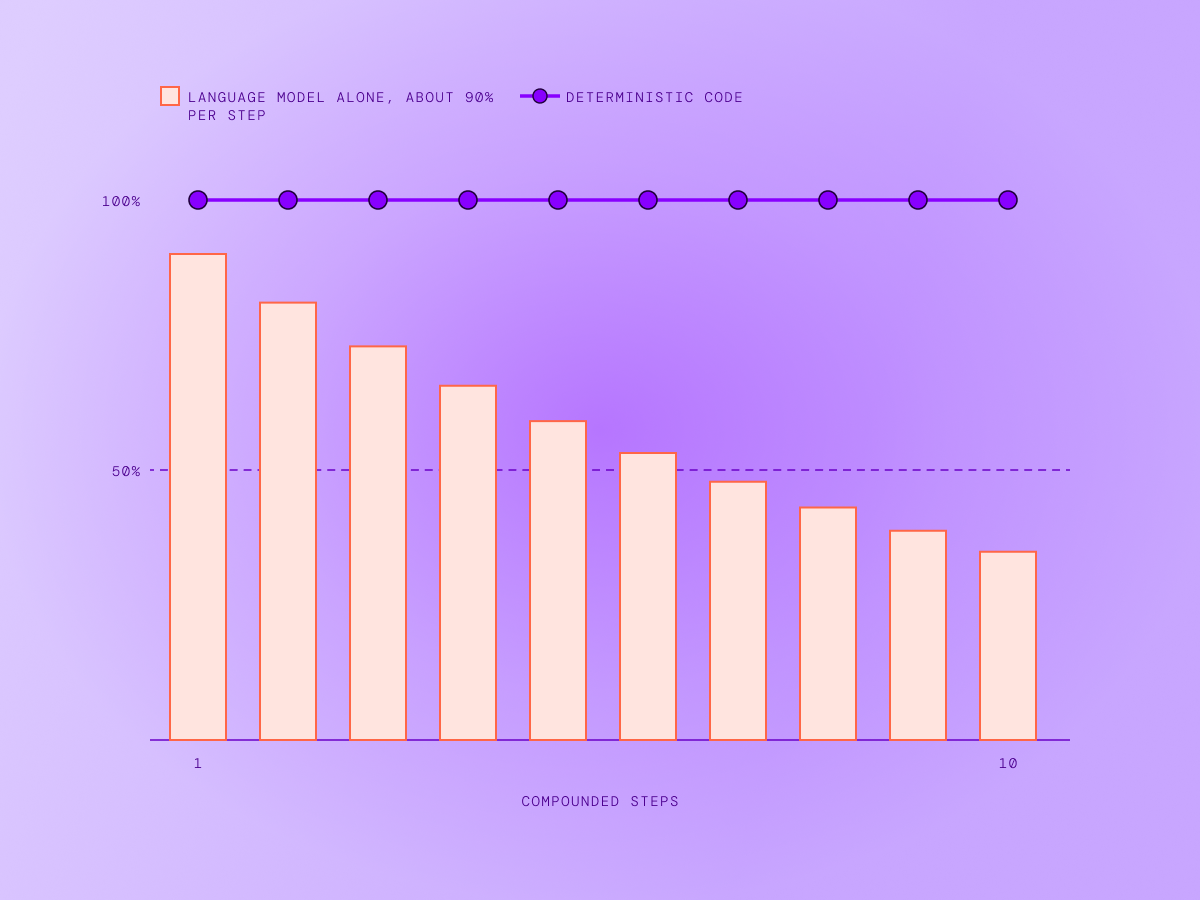
Language models are good at a great deal. Unfortunately, they are unreliable at compounding, multi-step quantitative reasoning, where one result feeds the next calculation. Small errors at each step add up quickly.
A model that retrieves any single fact correctly about 92% of the time sounds dependable. But ask it to get 10 facts right in a single answer, and the odds of getting them all right fall to roughly 43%, a calculation Ardoq lays out in its approach to reliable AI for enterprise architecture.
Another issue with language models is that they project consistent confidence whether they are right or wrong, so an incorrect total comes out in the same polished tone as a correct one. This means the reader gets no signal to double-check. The greatest risk and potential damage then is in workflows where decisions follow unchecked answers from language models.
Why Enterprise Architecture Is a Natural Fit
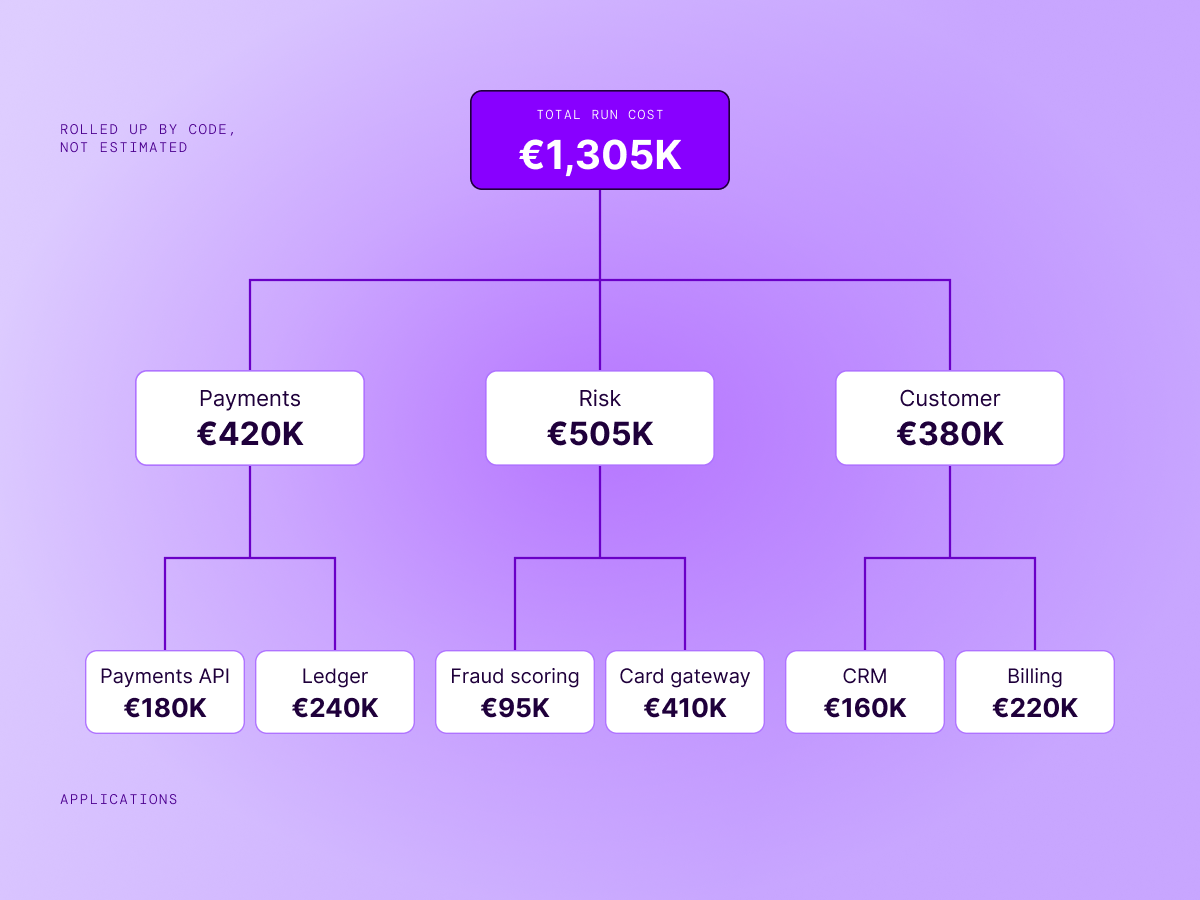
Many AI use cases are mostly about language: summarizing a meeting, drafting an email, answering a policy question. EA data is different. It is relational, structural, and numeric. Applications depend on other applications, which run on infrastructure, which supports capabilities owned by business units that carry costs and compliance obligations.
Questions about that estate are rarely a single lookup. Some examples of common questions that rely on multiple references:
- What does decommissioning this application cost, and what does it break?
- Which systems fall under a new regulation?
- What do total licensing costs look like once shared services are rolled up across the organization's hierarchy?
Each answer means following relationships, filtering a set, and adding up the result. This is the kind of work where rules and code are needed. This means the shape of EA data points to the shape of the solution: a narrative layer to interpret the question and explain the answer, and a deterministic layer to compute it correctly.
How Ardoq Puts Neurosymbolic AI to Work
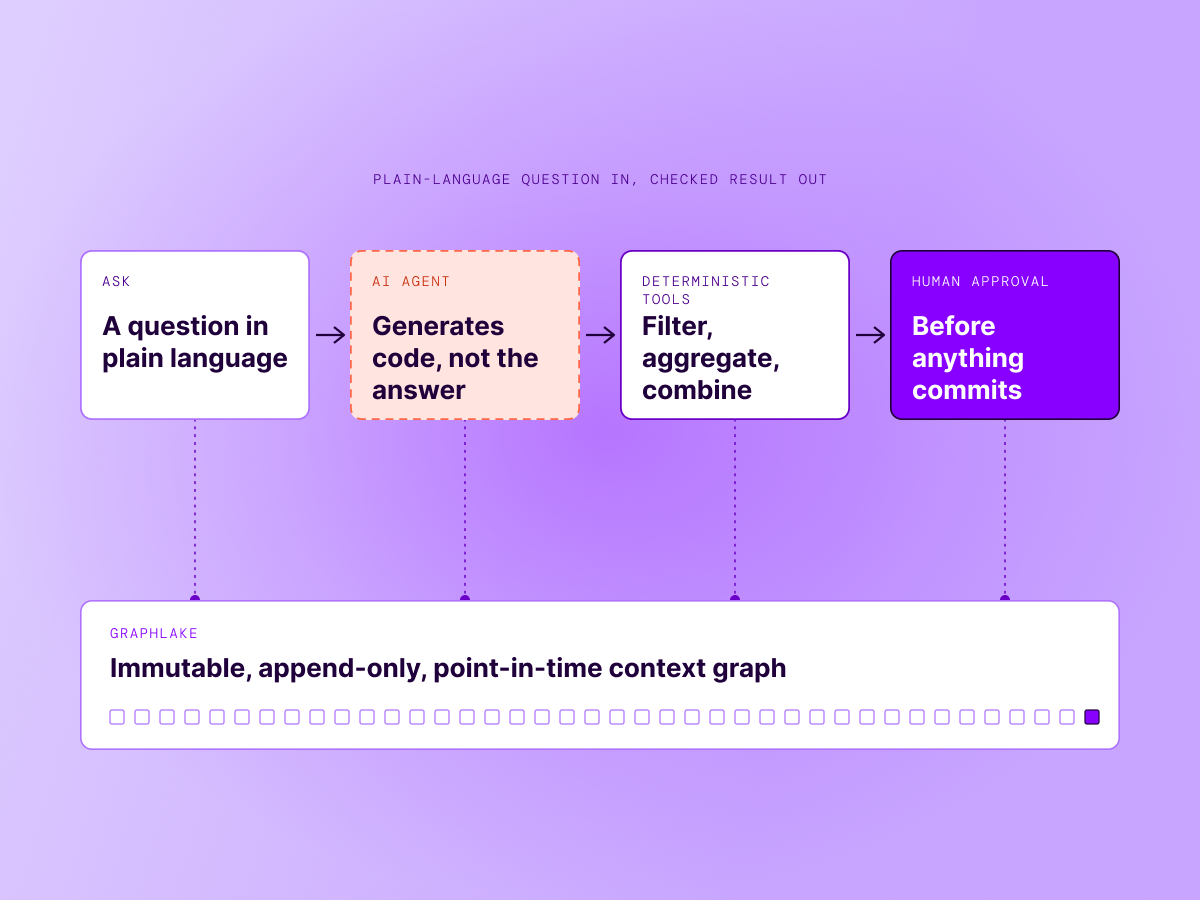
With these weaknesses of LLMs in mind, Ardoq's AI assistant has been engineered to ensure higher accuracy and to combine the strengths of different approaches for better results.
When a question is quantitative, the AI assistant writes code and calls deterministic tool functions that filter, aggregate, and combine the data, then returns only the synthesized result to the model. The language model is then not asked to compound arithmetic across steps, removing it as a source of arithmetic error.
Four other pieces sit around that core principle.
- Context engineering: Instead of dumping an entire repository into the model, the assistant works from scoped viewpoints, so it sees the slice of the estate that is relevant to the question. AI Semantic Search then finds the right records by meaning, not just keywords.
- Building in an EA-specific layer: An ontology of the metamodel plus reasoning rubrics, which teaches the AI what the relationships in an architecture mean.
- Transparency and traceability: Ardoq's AI assistant provides answers with reasoning chains an architect can inspect instead of a verdict to accept on faith.
- Human-in-the-loop: An actual EA or SME's approval is required before any change is committed to production data.
Underneath it all is the graph. Our acquisition of GraphLake adds an immutable, append-only, point-in-time context graph, so an answer can be traced back to the data as it stood when the question was asked. That makes outputs traceable and auditable, which matters when a decision has to be defended later.
Learn more about how Ardoq's AI Assistant Outsmarts Generic LLMs.
We also publish our own Ardoq AI benchmarks that explain how we determined them, what they test, and our latest results for each. Rather than asking you to trust the accuracy of our AI, we provide clear evidence and figures on the quality and reliability of our AI.
An Example of Neurosymbolic AI at Work: Decommissioning an Application
Take the question from earlier. An architect asks what the business impact would be of decommissioning a payments application.
The neural half goes first. It reads the question and works out what needs to be computed, such as the application's dependencies, annual cost, and compliance obligations. Instead of reading the raw data itself, it writes a short script that calls Ardoq's tools. Then deterministic code takes over, filtering, counting, and summing the data, and only the finished result goes back to the model. Back on the neural side, the model explains the result in plain language and shows its reasoning, so the architect can check how it reached the answer.
The architect still gets a quick answer, but the big difference is that the dependency count, cost figure, and compliance status aren't the result of probabilistic inference or guesswork. They come from deterministic code, so the same inputs always produce the same computed result.
The same approach powers Ardoq's agents. The Disaster Recovery Blast Radius Agent, for example, runs a disaster recovery impact analysis on an application, checks recovery times against business tolerance, and flags co-dependent applications with no DR plan, with every finding tied to the field and value behind it.
Even Neurosymbolic AI Cannot Produce Useful Results from a Poor Data Foundation
Many EA tools now include a chat assistant, but the real question is what powers it. An assistant or generic LLM layered over a legacy data model can only be as reliable as the model underneath it. When the underlying data is flat records, spreadsheets, or tables with few relationships, dependency questions are hard to answer correctly. A graph stores relationships as data in their own right, so tracing an impact is a natural query instead of a workaround.
While neurosymbolic design can reduce one class of errors, it doesn't fix bad data. If the repository holds stale or incomplete records, code will compute the wrong answer perfectly and consistently. A deterministic layer also cannot judge whether the question was the right one to ask. This is why data quality, integrations that keep the repository current, and human review remain crucial components to getting real value from AI in EA.
5 Questions to Consider When Evaluating AI in EA
Here are a few questions to consider to help separate a robustly engineered architecture platform from bolted-on AI hype:
- Are numerical answers the result of a model's guesswork or deterministic code?
- Can you see and trace how an answer was reached?
- Are there reliable human-in-the-loop systems in place preventing AI from polluting the repository with incorrect data?
- Are answers consistent, correct, and repeatable? The same question should get the same answer.
- Does the platform vendor publish transparent reports on how it tests its AI and the results?
For EA, where answers to queries often drive investment and risk decisions, traceable, accurate results are essential for AI to drive real value. Accuracy should be the bare minimum a vendor can prove and provide.
Want to see this on your own architecture data? Book a demo and put a real question to Ardoq's AI assistant.