/Logos/Ardoq/RGB_Ardoq_Logo_Primary_Purple.svg)

AI is making it easier than ever to build software. That's the exciting part that everyone is talking about, but it is not the full story of what happens in practice after the software is built, when someone has to run it, secure it, and answer for it.
Cheap and Fast Is About to Win, but Is It Sustainable?
We are heading for an explosion in software creation. Not because organizations suddenly need more systems, but because AI makes them seem cheap and fast to produce. When the initial cost of building is perceived to drop to nearly zero, people build rather than buy. Departments spin up their own tools and teams wire systems together over a weekend. Shadow IT stops being a policy problem and quietly becomes the default operating model.
Aaron Levie, CEO of Box, put a number on the shift to "DIY software".
"Agentic coding is a huge boon for software developers that want to get far more done, great for IT people to build vastly more custom systems internally, great for domain experts that want to automate workflows or wire systems together, and absolutely fantastic for anyone curious to learn how to start coding.
What it's less great for is casually building complex software that you have to maintain on an ongoing basis and take on all the risk for. Upgrades, maintenance, keeping up to date with the latest security issues, and so on, are taxes most knowledge workers aren't familiar with or prepared for.
Net net: we're going to get 100X more software and vastly more software developers in the future. But that's different from *everyone* rolling their own."
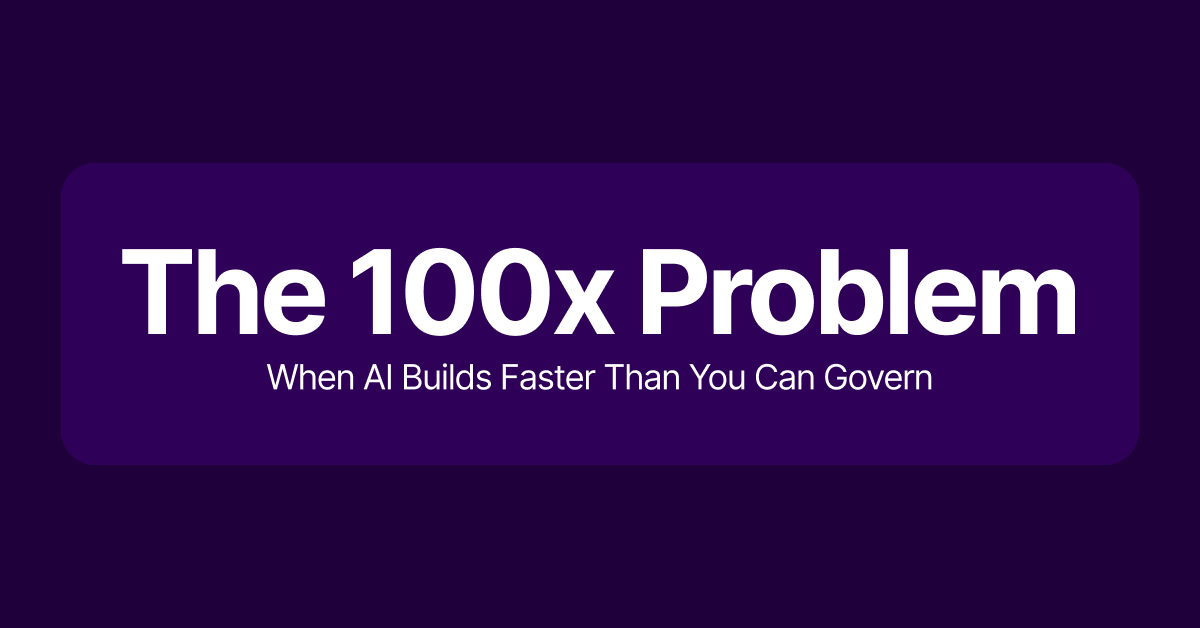
He expects agentic coding to give us 100x more software and far more people writing it. His caveat, however, is the important part. Generating software is the easy part, but owning it is not.
Low Cost but High Risk: A Governance and Maintenance Nightmare
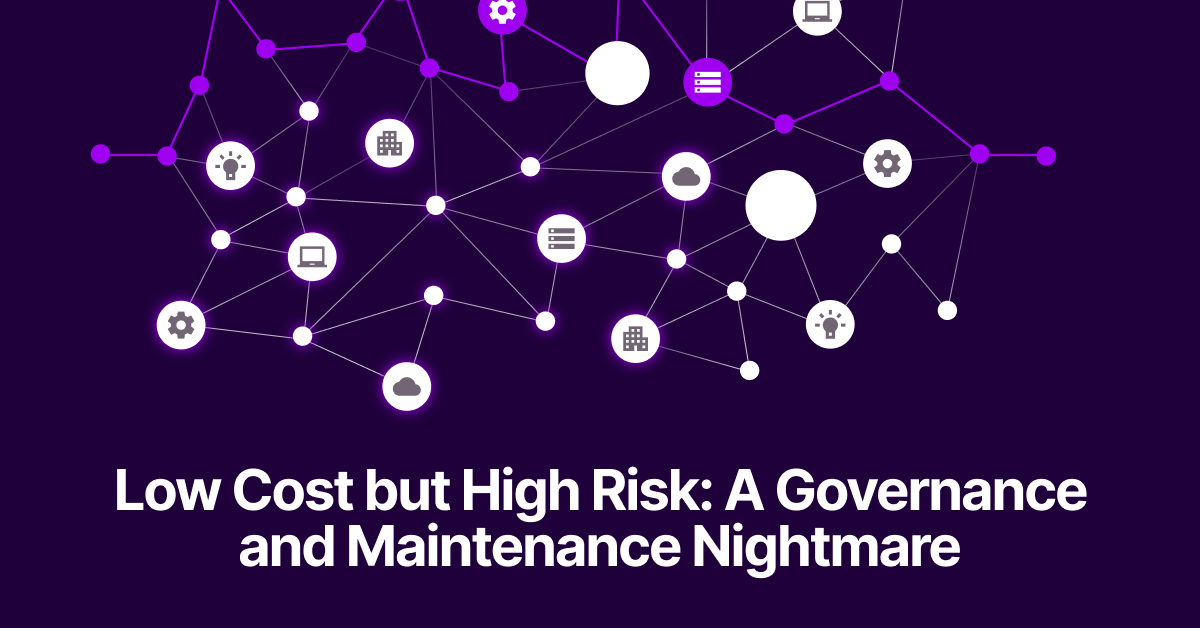
Every new system somebody builds is a system somebody has to account for later. Multiply that by 100x, and the math gets uncomfortable for the average organization. A flood of AI-generated software creates:
- Fragmentation across tools that do not talk to each other
- Ownership no one can clearly point to
- Security gaps hiding in code nobody reviews
- Maintenance work that silently compounds
- Decisions made with no view of what already exists
None of these show up in slick previews or on launch day. They show up weeks or a few months later, when something breaks, and no one can say who built it, what it touches, or whether it is safe to change.
Learn more: why building your own AI tooling costs more than it looks.
The Market Is Asking the Wrong Question
Right now, many enterprises are asking, "Can we build this with AI?" The answer is almost always yes, and that is exactly why it is the wrong question. The better one is much harder: who will manage, govern, and maintain what we build? And what will that really cost us?
These questions expose an uncomfortable truth that most organizations are not set up to answer. To begin with, they cannot reliably track what already exists, map how systems depend on each other, govern change before it causes damage, or trust the quality of their own data. These gaps were manageable when software was expensive and slow to create. AI removes the friction that used to keep them small.
The true "cost" of DIY software with AI is further obscured by the lack of clarity into ownership and ongoing maintenance. Should project teams or engineering teams really be diluting their focus on core products, services, or initiatives to maintain homebrewed shadow IT?
AI Raises the Bar for Structure, But It Doesn't Remove It
The important point here is reframing how AI is approached and leveraged. AI does not reduce the need for structure; in fact, it makes structure more critical than it has ever been. The faster you generate, the more you need a clear, connected view of what you have and what it affects.
This is where a platform like Ardoq earns its place. It connects systems and their dependencies, so organizations can see how a single change ripples across the estate. It gives IT and Enterprise Architecture leaders visibility and control over what exists and who owns it. And it turns that picture into better decisions at scale, so more software does not quietly become more risk and more cost. Generation gives you volume, but structure is what keeps the volume safe to hold.
Get the honest breakdown on building with AI vs. buying software and whether AI is good enough for enterprise-grade decisions. Watch now: Can AI Replace Your EA Platform?
The Winners Won't Be the Ones Who Build the Most
AI will create more software than the enterprise has ever seen just because building is easier than ever. However, volume doesn't equate to quality, nor to real value creation for the business. Instead of building as fast as possible and as much as possible, organizations should instead be doubling down on managing, finding, and governing. Clarity and control will ensure real momentum forward in the market, not more software in the mix.
Ready to see where your own AI-generated sprawl stands? Watch our on-demand webinar "AI Won't Fix Weak Architecture. It Will Expose It." to understand how AI amplifies weak architecture and how you can bring discipline to your AI portfolio.

/Logos/Ardoq/RGB_Ardoq_Logo_Stacked_White_Monochrome%201.png?width=80&height=77&name=RGB_Ardoq_Logo_Stacked_White_Monochrome%201.png)