/Logos/Ardoq/RGB_Ardoq_Logo_Primary_Purple.svg)

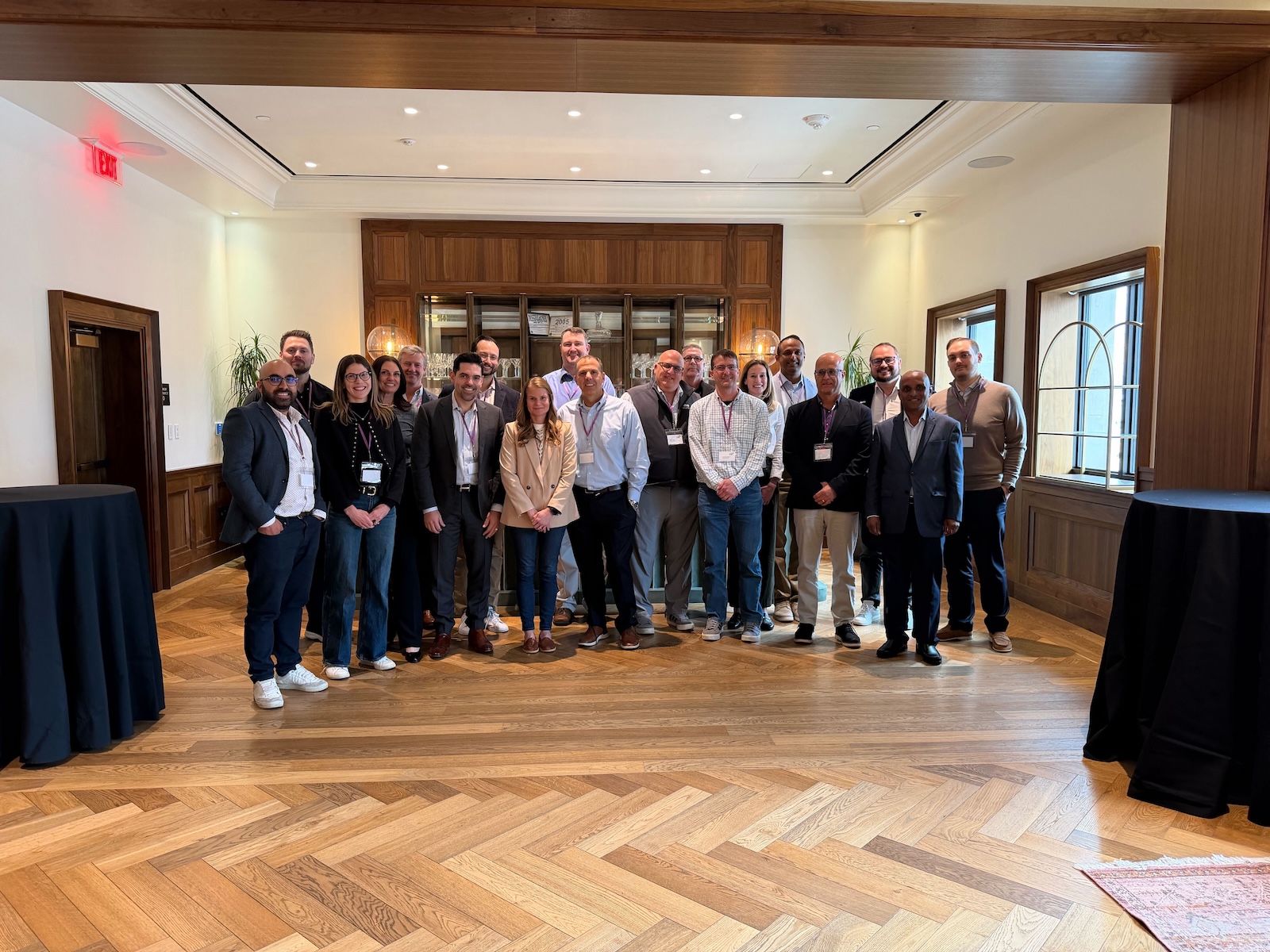
We brought enterprise architects and IT leaders together for our Customer Advisory Board this spring, and the conversations didn't go the way most AI panels do. Nobody argued about whether AI matters, but instead what it's exposing.
Across three discussions, a pattern kept surfacing: AI is forcing organizations to confront the architectural debt they'd been quietly living with for years. Here are five trends that came directly from that room.
1. AI Doesn't Fix Bad Data, It Only Exposes It
One architecture leader summed up a conversation his organization has been having for over a year about their messy data:
"AI can't fix this. You can only leverage AI if you fix the data first."
That's not a controversial idea in the abstract. Most EA teams already know their data has gaps, but the cost of ignoring it and the urgency is higher than ever before. Where a stale application record used to be a documentation problem, it now becomes an AI reliability issue, because every AI agent working from poor data inherits its blind spots.

This means data quality has quietly become an AI readiness question, not a thankless housekeeping task. Ardoq customers are increasingly using tools like our Foundation Insights Agent to surface data gaps automatically, rather than waiting for a board presentation to reveal them the hard way.
2. The Urgent Need for a Shared Language
For years, "we don't have a consistent metamodel" was a conversation EA teams could put off. Multiple people in the room said the same thing in different words. Now AI has made that conversation impossible to defer any longer.
An AI system can only reason as well as the language it's given. If "application," "capability," and "risk" mean five different things across five business units, no amount of AI sophistication fixes that misalignment. The model doesn't really understand your organization; it only understands whatever structure you hand it. One attendee put it plainly: the model will only understand your language if you've actually defined it.
This is the argument for the metamodel that governance conversations couldn't quite land before AI arrived. It's also why the strongest AI results in the room came from teams with a defined, consistent ontology behind their data, not from generic AI layered on top of chaos.
3. EA Is Becoming Where AI Questions Land
A theme that came up unprompted across multiple conversations: compliance teams, business units, and technology teams are all bringing their AI questions to architecture, whether or not that's officially in the job description.
The reason is structural. AI questions are rarely single-discipline. Often, a question about where a model's training data comes from touches data governance, vendor risk, technology dependencies, and business processes, all at once. No individual team owns that full picture. EA is one of the only functions positioned to see across all of it, which is exactly why it's becoming the default landing spot when nobody else can answer the question alone.
Ardoq's AI Lens solution has been built to give EA teams a structured way of meeting this newfound demand for insight with architectural rigor.
4. Risk Aversion vs Organizational Agility: Differing Regional Pressures for Reliable Architecture
In Europe, a key driver for EA and the need for data-driven architecture is regulatory readiness. Compliance with the EU AI Act, DORA, and similar frameworks is the reason they need live architecture overviews that can be proved. Regulatory exposure, accountability questions, and reputational risk are real constraints on how fast they can move, not a matter of appetite.
The story was quite different for the US, where the drivers are speed with a safety net: organizational agility and adaptability without losing track of what's moving. Intense leadership demand for AI and fear of being left behind have translated into a much greater need for insight into what AI is actually costing and delivering to the business.
5. AI Agents Are Not Equal
One customer built and compared the answers from a generalist AI agent and a specialist agent grounded in their own architectural context using Ardoq's MCP server integration. The specialist agent won, clearly and consistently, not because it was a smarter model, but because it wasn't guessing.
It reveals the value of data-driven architecture in powering robust AI reasoning. While many AI evaluations are based on slick demos to generic questions, organizations cannot and should not be making decisions based on plausible-sounding guesses from what most companies tend to look like.
The takeaway for EA teams: stop evaluating agents on how confident they sound. Ask a question only your own architecture can answer correctly, then check the response against what you know to be true. If a vendor can't explain how their AI is grounded in your data, in your language, you're judging fluency, not accuracy, and that's the wrong test to be running before an agent's answer ends up driving a real decision.
What Ties These Together
None of these trends are really about AI. They're about what AI has made impossible to postpone: clean data, shared language, and a clear owner for cross-functional questions. Ardoq makes all of these possible, serving as the architectural foundation that makes any AI trustworthy enough to act on.
Book a demo to see how Ardoq helps you build that foundation before AI forces the conversation for you.

/Logos/Ardoq/RGB_Ardoq_Logo_Stacked_White_Monochrome%201.png?width=80&height=77&name=RGB_Ardoq_Logo_Stacked_White_Monochrome%201.png)