/Logos/Ardoq/RGB_Ardoq_Logo_Primary_Purple.svg)
For the past few years, AI in the enterprise has largely been about content generation and assistance. Smarter search. Auto-generated descriptions. Recommendations surfaced at the right moment. These are genuinely useful capabilities, but they're still fundamentally passive. You ask; the AI answers.
That model is giving way to something different in 2026. Agentic AI doesn't wait to be asked. It operates with context, makes decisions, and takes action. For Enterprise Architecture, that shift changes not just what the tools can do, but also what EA itself can be.
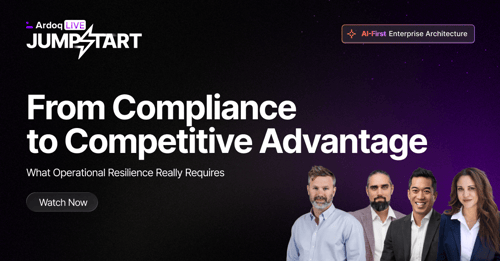
This month, we got our experts to share how the future of EA is autonomous, outcome-driven, and powered by high-density graph databases.
Watch the full episode here or scroll down to get the highlights from each of our experts:
The Technical Foundation Needed for AI: Why Information Density Matters

“Instead of putting AI in every single step along the way, we’re trying to use AI where it’s most powerful. We want AI to be a proactive helper to help you reach the outcome you want.”
- Jarand Narbuvold, Director of AI at Ardoq
What’s The Difference Between an AI Agent and Generative AI
Most of what gets called "AI" in enterprise software today is generative AI — specifically, large language models. An LLM is a component of an AI agent — the reasoning step — but the agent itself is proactive. It reaches out and takes action following instructions and a schedule set by the user. AI agents drive toward outcomes rather than waiting to be prompted.
What Causes Hallucinations and How Ardoq Mitigates Them
Hallucinations are often just a failure of the data provided to the AI, either too much or too little for it to reason successfully. When a model receives poor documentation, its "attention budget" spreads thin, leading to incorrect inferences. For an agent to be successful in an enterprise setting, it needs more than just a powerful model; it needs the right context at the right time. Ardoq’s knowledge graph enables us to maintain the appropriate information density, feeding AI agents the minimum high-quality information needed to solve a task.
AI Market Volatility and Why We’ve Chosen to be Model Agnostic
The AI model landscape is moving fast enough that locking into any single provider is a real business risk. The best model available today may not be the best in twelve months. Models are getting cheaper and improving at an exponential rate.
This is why we’ve chosen to be model-agnostic, ensuring that we are able to use the latest and greatest model at any given time. Model agnosticism also means that Ardoq and our customers are less exposed to the risk caused by market volatility in AI.
While being model-agnostic is the right choice for operational resilience, it is harder to build than it sounds. When AI is embedded across hundreds of product features rather than a single interface, changing the underlying model requires regression testing at scale. Every feature that touches AI needs to be verified against the new model's behavior. Ardoq has built the testing infrastructure to make this possible, which allows us to follow the best available models rather than being locked to a particular provider.
Watch the full interview below:
3 Key Takeaways for Leveraging AI Successfully:
- Effective Innovation With AI Means Focusing on Outcomes and Redesigning Approaches: Just “bolting on” AI to replace one manual microstep isn’t enough. Ensure you’re solving the right problems and getting the results you need by anchoring AI development in outcomes and relooking the whole process, redesigning it to work with AI from the ground up.
- Model Agnosticism Is Vital for Resilience and Agility: Models are improving and becoming cheaper at an accelerating rate. Ardoq’s model agnosticism allows us to swap to the best-in-class model at any time and keep pace with accelerating tech.
- A Vendor’s Information Strategy Is a Key Differentiator: While many current AI features will become parity and “commoditized”, what will set vendors apart is how well they orchestrate high-quality, high-density information to feed models the context needed to act effectively.
Reshaping the Role of EA: Digital Twin Intelligence and Neuro-symbolic AI
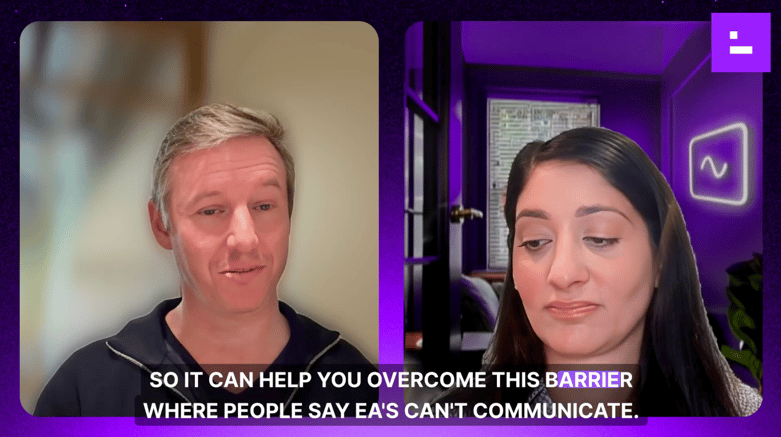
“AI can help you overcome this barrier where people say EAs can’t communicate.”
- Jason Baragry PhD, VP of Product Research at Ardoq
Enterprise Architects have long faced the challenge of engaging the wider organization and decision-makers. Regardless of the technological landscape, communication with business stakeholders, capacity constraints, and a limited talent pool remain ongoing issues for EAs.
Agentic AI can help them change this dynamic, but it needs the right context and information density to really shift the dial.
Why Information Ontologies are Making a Comeback
Ontologies — structured representations of how concepts relate to each other — were a significant area of focus in information architecture research through the 1990s and early 2000s. They fell away largely because they were too complex and too brittle to maintain in practice.
However, AI is changing the value equation.
When an AI agent encounters a field called "criticality" in an architecture repository, it doesn't know specifically what it means in the context of the organization. Does criticality mean uptime requirements? Business dependency? Cost to replace? And if the scale runs from one to five, which end is worse?
Without that context, the model infers with varying levels of accuracy.
Ontological metadata gives the model the detailed information that it needs to reason more accurately — the extra layer of meaning that turns a field value into something the AI can work with precisely. This is not a theoretical capability. Ardoq is actively building ontology techniques into its metamodels to improve the information quality, such as with our newly-launched Foundation Insights Agent.
Neuro-symbolic AI for Strengthening Generative AI To Produce Reliable Deterministic Outputs
EAs need to be aware that one of generative AI’s biggest weaknesses is deterministic logic, like in mathematics.
When an architect asks an AI, "What's the business impact of decommissioning this application?", it’s a question that requires both narrative reasoning and verified, deterministic answers on the dependency count, the cost figure, and the compliance status.
To address this weakness, Ardoq applies techniques, also called neuro-symbolic AI, to combine the strengths of generative AI with traditional rule-based or code-based techniques. This means that when asked a quantitative question for a report, the AI doesn’t infer but instead generates the code necessary to analyze and return a specific, mathematically correct number. This helps architects conduct analysis and outputs that stakeholders can trust.
How Architects Should Be Leveraging AI to Guide Leadership
EAs should be exploring how AI can help reduce the manual legwork, freeing their capacity to serve as strategic advisors, as well as leverage it as a valuable tool for overcoming the communication barrier with business stakeholders.
To this end, we’ve produced two guides to help EAs get started:
- Prompt Engineering Playbook: 18+ ready-to-use templates to help you rationalize apps, optimize costs, map capabilities, and more.
- Context Engineering Guide: How to design and structure information so AI can deliver real business value — reliably, securely, and at scale.
Ardoq’s goal is to empower EAs with AI capabilities that allow them to perform as a strategic guidance unit and continuous review board, instead of manual gatekeepers. This means the AI can surface the relevant decision records, principles, and reference architectures at the moment a choice needs to be made, enabling better decision-making in real time but always keeping the “human-in-the-loop” for the actual decisions.
Governance as a Continuous Layer, Not a Tollgate
One of the most persistent frustrations in enterprise architecture is the governance bottleneck. The architecture review board that only engages at the end of a project, when most decisions are effectively locked, the team that is sometimes known internally as the “Department of No”.
This pattern isn't the result of bad intentions. It's the result of a governance model that was never designed to operate at the speed and distribution of modern software delivery. Teams are moving fast, ownership is distributed, and by the time a project reaches a formal review, the cost of change is high.
AI changes what's possible. Instead of governance as a periodic tollgate, it becomes a continuous layer — available throughout the design and delivery process, surfacing the decision records, principles, and reference architectures relevant to the choice being made right now.
Architects don't need to remember every policy or pattern. The system can surface what's relevant when it's relevant. Teams get guardrails that help them make better decisions rather than a review board that arrives too late to change anything.
This is the shift from compliance-as-audit to compliance-as-assistance. And it's one of the most commercially meaningful changes AI makes possible in the EA category.
Watch the full interview below:
3 Key Takeaways for Enterprise Architects in the Age of AI:
- Generic AIs Cannot Substitute a Purpose-Built EA Platform Powered by AI and a Knowledge Graph: Standard LLMs by themselves lack the context and information density needed for truly effective, trustworthy results. Connecting an LLM to Ardoq ensures it has access to both, providing accurate and reliable results.
- EAs Will Need to Understand and Adapt to AI: EAs cannot afford to treat AI as a trend that will blow over. It’s important that they work with it to understand AI’s strengths and weaknesses.
- Use AI to Reduce Manual Work and Bridge the Communication Gap: AI can help EAs translate technical EA data into strategic narratives that will resonate with business stakeholders. Leverage Ardoq’s Prompt Engineering Guide and a Context Engineering Guide to develop the relevant assets for high-level, strategic discussions with the business.
Ardoq’s AI Roadmap: Building Intelligent Assistants That Drive Outcomes
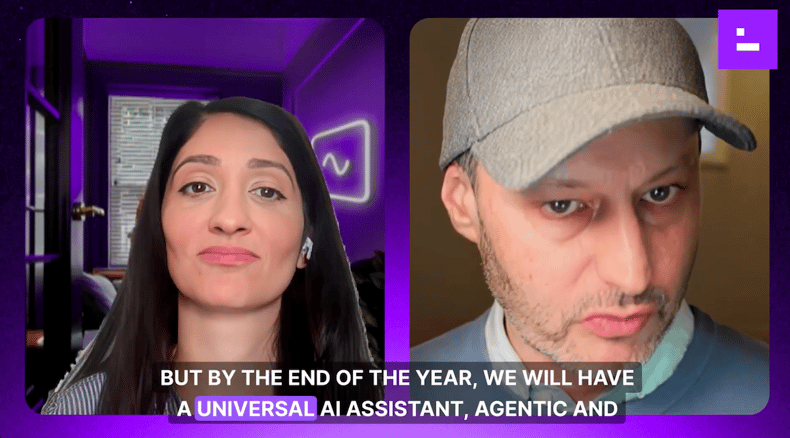
“By the end of the year, we will have an autonomous AI assistant that follows you around in Ardoq, helping you in the context where you are and solving the different problems you face.”
- Mario Aparicio, Principal Product Manager at Ardoq
Ardoq’s AI Roadmap: Specialized Action-Oriented Agents That Help Guide Customers to Outcomes and Digital Twins
The Ardoq AI roadmap is moving from insights toward a consistent AI experience that follows the user throughout the platform. This isn't a generic passive chat assistant; it is a suite of specialized agents tailored to specific outcomes like Application Rationalization or transformation planning.
We see the future as one where agents will proactively engage the architect and guide them through tasks and towards outcomes. Instead of a user asking the tool for a report, the agent identifies missing information in a business case and autonomously reaches out to the owner to close the gap. This moves EA from a passive repository to one that actively drives you to outcomes. Ardoq’s Foundation Insights agent is just the starting point for making this reality.
AI is also rapidly making the vision of the Digital Twin of the Organization (DTO) a reality. AI makes it possible to integrate structured enterprise architecture information from Ardoq with operational data, as well as information about the external context of the business. When combined, these form the basis of a decision intelligence engine that is very close to the vision of what a DTO can offer. This precisely the vision Ardoq is building towards.
EA Data, Wherever You Work
One of the most significant moves in Ardoq's current roadmap is the AI Gateway — an MCP (Model Context Protocol) server that exposes Ardoq's architecture data to external AI agents and platforms.
The reasoning is straightforward: enterprises are building their own agentic AI frameworks, and they're not building them entirely inside any single platform. The architecture data in Ardoq needs to be queryable wherever people are actually working — in a Teams chat, in a Slack channel, inside another AI tool.
A developer asking who owns a given application should get an accurate answer without leaving their collaboration environment. A business analyst building a case for a major investment should be able to pull relevant architecture context without switching systems.
Ardoq has built a semantic layer on top of this integration — effectively instructing LLMs that know nothing about EA how to navigate Ardoq accurately and autonomously. This is what separates a useful integration from a noisy one, and it's what allows genuinely complex architecture queries to be answered correctly through external interfaces.
The Tri-Stack: Governance, Intelligence, Automation
Ardoq's AI investment is structured around three layers that work together.
- Governance covers the management and safety of AI agents — permissions, data controls, compliance guardrails. As AI becomes more autonomous, this layer is what keeps it trustworthy.
- Intelligence is the knowledge graph that grounds AI responses in live architecture data. This is what makes the difference between a generic AI answer and one that reflects the actual state of your enterprise.
- Automation is where autonomous agents drive users toward outcomes — guided workflows for application rationalization, transformation planning, and business case development — with human oversight built into the process.
Together, these three layers give enterprises something genuinely new: an architecture platform that doesn't just store and visualize data, but actively helps them act on it.
Watch the full interview below:
3 Key Takeaways on Ardoq’s AI Roadmap:
- Rethinking AI to be Solution-Focused Instead of Troubleshooting: We foresee AI agents not just as passive executors of manual work but also as proactive guides for architects to achieve outcomes.
- Digital Twins are Closer to Reality Than Ever: By bringing process information and architecture data together, Ardoq is setting the foundation for AI to accelerate the development of a Digital Twin and enhanced decision intelligence for the enterprise.
- Ardoq’s Unique "Tri-stack" Advantage: Ensuring AI agents are governed, anchored in the knowledge graph, and able to power autonomous agents that drive towards outcomes is what makes Ardoq’s overall “package” of AI capabilities a key differentiator among SaaS vendors.
Ready to Explore the Future of Agentic AI?
The transition of EA from a passive toolbox to a proactive partner is already underway. To stay relevant, Enterprise Architects must adapt to these new capabilities and empower their organizations to make better decisions faster.
Book a Demo to see how Ardoq is building the future of enterprise architecture.

/Logos/Ardoq/RGB_Ardoq_Logo_Stacked_White_Monochrome%201.png?width=80&height=77&name=RGB_Ardoq_Logo_Stacked_White_Monochrome%201.png)