/Logos/Ardoq/RGB_Ardoq_Logo_Primary_Purple.svg)



/Logos/Ardoq/RGB_Ardoq_Logo_Primary_Purple.svg)




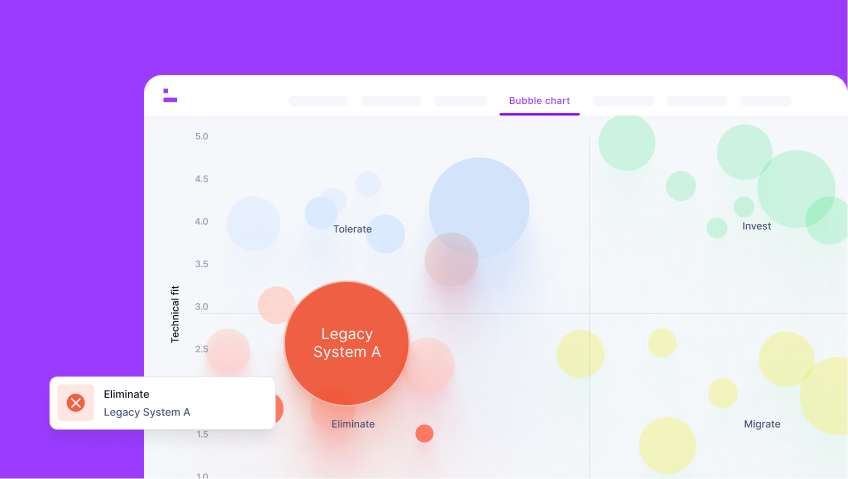
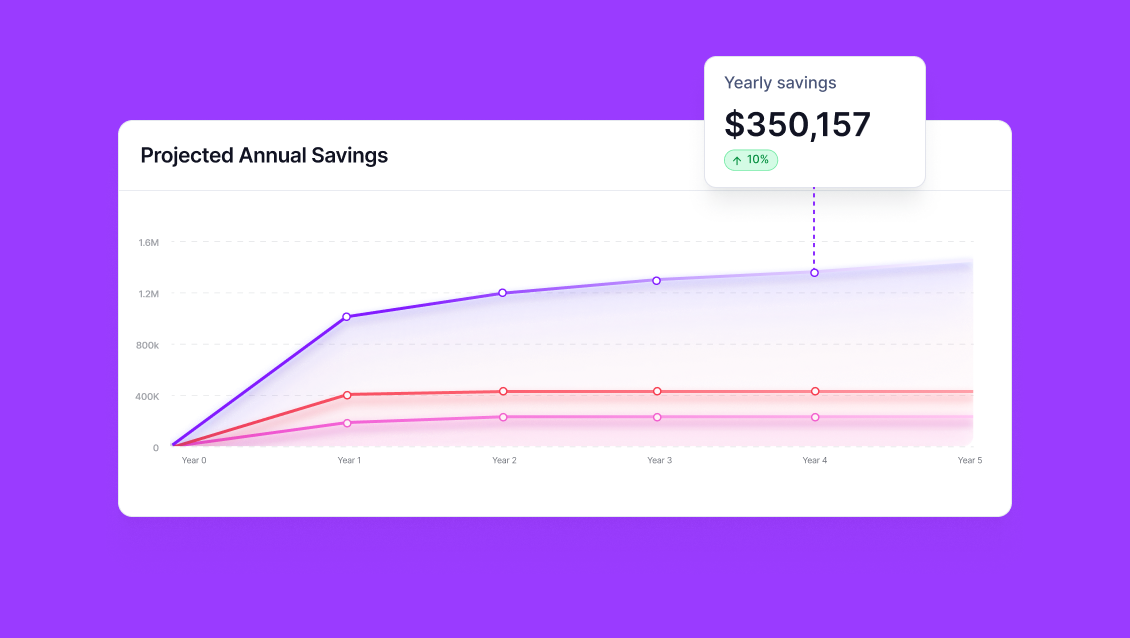
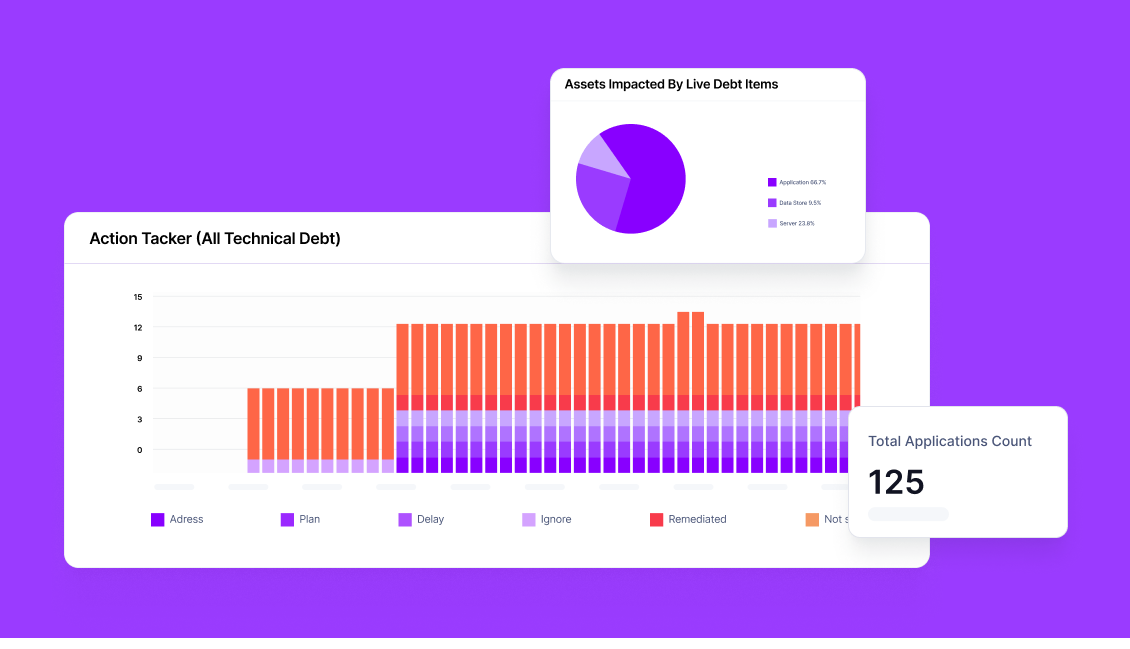


Most traditional tools require months of manual data entry before showing results. Ardoq delivers insights in week one or two, long before a repository is "full". Even with 10% to 30% of data, you can generate useful maps, impact analysis, and capability views. Ardoq uses out-of-the-box integrations and an automated Import API to synchronize data from existing systems like ServiceNow, Azure, and Jira immediately.
Ardoq eliminates the "painful" manual work associated with past projects through no-code transformations that clean messy Excel data during import. Because Ardoq connects to your live systems, data maintenance is automated rather than manual. This shifts the architect's workload from 80% grunt work to 80% delivering strategic value.
While tools like Claude or ChatGPT make it incredibly cheap to script a basic application inventory over a weekend, Ardoq is an enterprise-grade platform engineered for reliable, long-term cost optimization. Key differences include:
-
Platform vs. Prototype: AI tools drastically lower the cost of initial creation, but they heavily increase the cost of continuous maintenance, coordination, and control. Building your own application rationalization tool forces your internal team to become a permanent software support team for a buggy asset, pulling them away from work that actually differentiates your business.
-
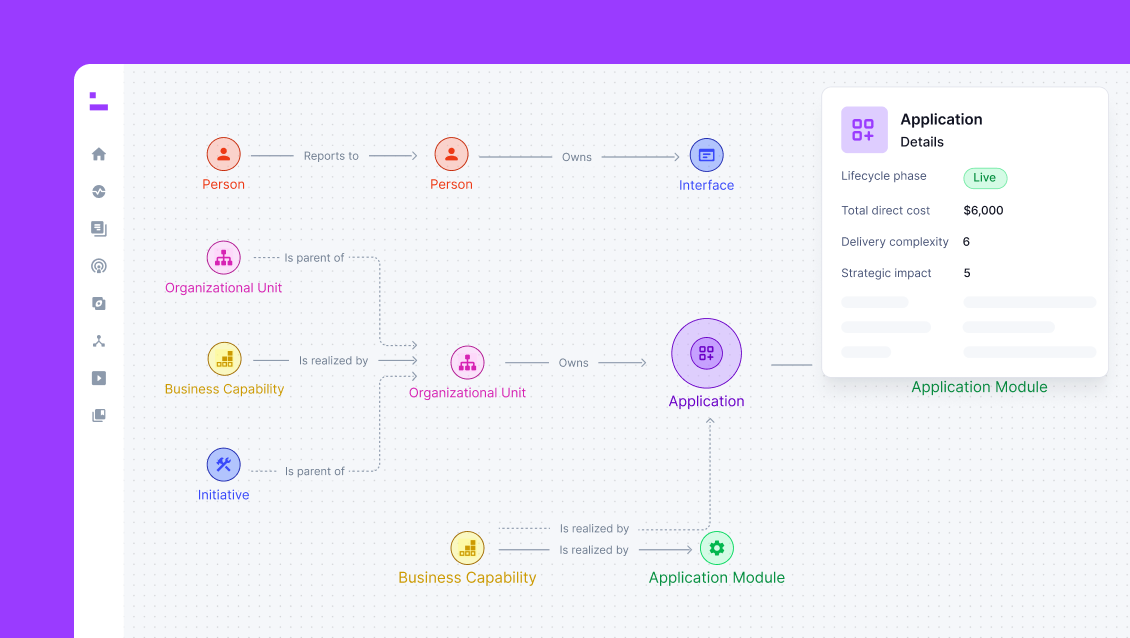
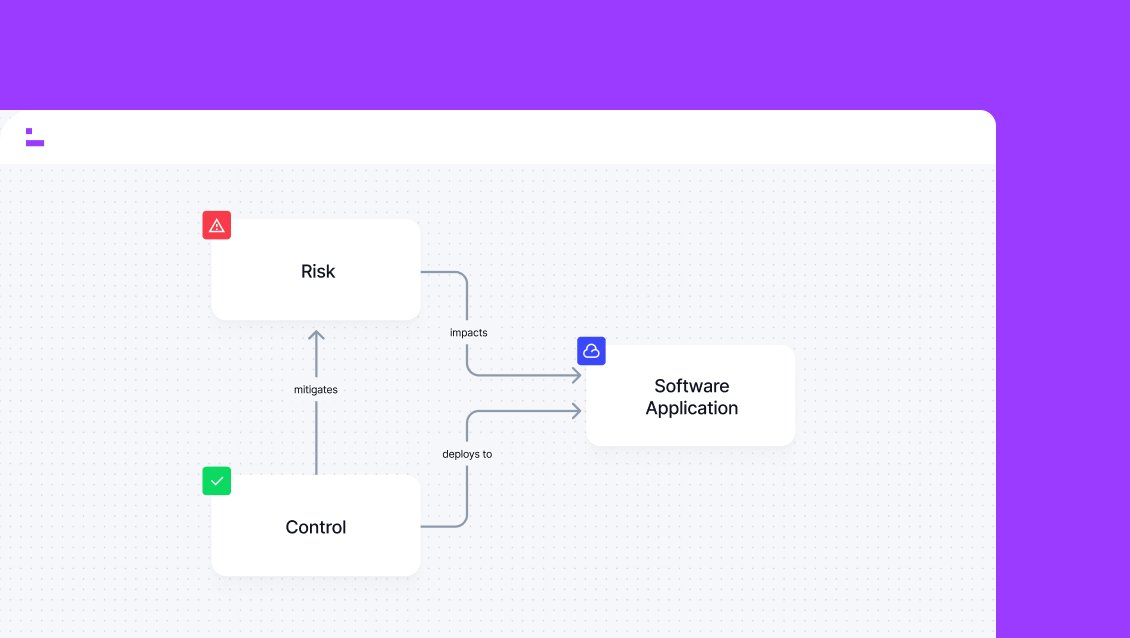
Graph-Native Dependency Mapping: Application rationalization is rarely a single-use case; it expands into complex transformation, security, and risk planning. Ad-hoc AI scripts cannot model the multi-level paths of your architecture—like how an overlapping application connects to a specific process, capability, and cloud dependency.
-
The New Ardoq Experience Advantage: Our redesigned experience combines the effortless, guided workflows of a simple tool with the deep, uncompromised scaling power of a graph-native platform. Ardoq can automatically handle up to 40% of routine architecture work out of the box using built-in, context-aware AI Architects—giving you instant, trusted value without the internal engineering liability.
Layering an off-the-shelf Copilot or LLM on top of static spreadsheets looks like a fast, budget-friendly shortcut, but pointing generic AI at messy, flat data simply gives you faster wrong answers with a higher level of confidence. Key differences include:
-
Grounded Reliability vs. Hallucination: Standard LLMs lose retrieval accuracy when forced to reason across multiple text records. When asking complex application rationalization questions involving 10+ dependent data points (e.g., costs, lifecycles, and capabilities), raw AI accuracy plummets below coin-flip odds. Ardoq uses graph-grounded reasoning, leveraging our underlying knowledge graph to compute deterministic, hallucination-free decisions.
-
Traceable, Defensible Logic: Generic AI outputs sound highly convincing even when they are wrong. In a board meeting or a cost-cutting evaluation with the CFO, "the AI said so" is not a defensible stance. Every recommendation inside Ardoq includes a complete Decision Trace, mapping out the exact data source, owner, and logic chain behind an insight.
-
Autonomous Data Ingestion and Flywheel: Spreadsheets are outdated the second they are saved. Raw AI can read files, but it cannot fix data decay or self-correct records. Ardoq's goal is to keep your inventory alive automatically through an information flywheel, deploying proactive Broadcasts directly into Slack or Teams to gather, enrich, and validate application ownership from your subject matter experts in real time.
While moving from legacy tools (like Mega, Orbus, or Bizzdesign) or specialized APM tools (like LeanIX) requires an initial transition period, most customers find that the "pain of staying" in a rigid, manual system far outweighs the effort of moving.
Here is how we make the transition smooth and high-impact:
-
Effortless Data Ingestion: Ardoq allows you to ingest data directly from your existing tools via Excel/CSV, robust APIs, or out-of-the-box integrations with ServiceNow, Jira, Azure, and AWS.
-
Flexible Metamodeling: You can start with your existing data structure and evolve it over time, avoiding the need for a "big bang" migration.
-
Outcome-Focused Onboarding: Ardoq comes with a guided Foundation solution that allows you to move from questions to answers fast in a guided 5-step process. See your application estate, ownership, and business impact within the first 4 weeks.
-
Automated Maintenance: Visualizations are automatically generated and updated, based on data and real-time insights.
-
High Usability: Ardoq is designed for the modern business with a focus on accessibility. This means less time learning the tool and more time driving strategic change.
While LeanIX is primarily an Application Portfolio Management (APM) tool, Ardoq is a full, flexible Enterprise Architecture platform. Key differences include:
-
Ecosystem Neutrality: Ardoq is vendor-neutral, ensuring your enterprise architecture stays flexible even if your ERP strategy changes.
-
Support for All Customers: Ardoq provides named experts and proactive onboarding for a 95% CSAT rating.
-
Depth and Flexibility: LeanIX uses a simple, pre-configured interface that can lack depth. Ardoq uses a graph-native model that adapts to new questions and future simulations without restrictions.
While Orbus is a traditional modeling tool often tied to the Microsoft stack, Ardoq is a data-driven "digital twin" platform built for modern transformation. Key differences include:
-
Automated Intelligence: Orbus relies heavily on manual diagramming and Visio-based effort. Ardoq uses a graph-native database to automate visualizations, ensuring your architecture updates in real-time as your data changes.
-
Crowdsourced Data: Ardoq democratizes EA through automated Surveys and Broadcasts that proactively collect insights from subject matter experts across the business, whereas Orbus typically requires architects to manually hunt for information.
-
Advanced Scenario Modeling: While Orbus focuses on documenting the current state, Ardoq allows you to create "branches" to simulate future-state scenarios, perform impact analysis, and compare strategic options side-by-side without risking your baseline data.
While BlueDolphin (formerly ValueBlue) positions itself as a Business Transformation Platform focused on visual planning, Ardoq is a data-driven decision intelligence platform built for complex, real-time change. Key differences include:
-
Modeled Futures vs. Drawn Scenarios: BlueDolphin focuses on "Solution Design" where users draw and compare architectural options visually. Ardoq treats future states as architectural artifacts with deep, model-driven impact analysis and "code-style" branching, allowing you to simulate and analyze the data-backed consequences of a decision before it's made.
-
Decision-Centric AI: BlueDolphin’s AI is designed to democratize access to information (summarizing what is there). Ardoq’s AI is built to democratize decisions—reasoning over the live graph to proactively recommend the "next move," such as identifying specific application rationalization opportunities or hidden architectural risks.
-
Automated Intelligence over Manual Tracking: BlueDolphin follows a "Draw → Plan → Track" methodology, which still carries a manual modeling burden for the architect. Ardoq follows a "Model → Analyze → Decide" approach, using automation and crowdsourced surveys to ensure the "digital twin" stays current without manual drawing effort.
While Bizzdesign is a long-standing tool favored for its deep ArchiMate compliance and complex modeling, Ardoq is a cloud-native, data-driven platform built for agile business transformation. Key differences include:
-
Engagement-First Culture: Bizzdesign is often used as an "expert tool" for specialized architects. Ardoq prioritizes democratization with Surveys and Discover, allowing non-technical stakeholders to contribute data and consume insights without needing to understand complex EA notations.
-
Graph-Native Flexibility: Bizzdesign relies on a more rigid, traditional metamodel structure. Ardoq’s flexible graph database allows you to connect any data point—from people and processes to strategies and technical assets—making it easy to adapt the model as your organization’s questions evolve.
-
Automated Data Maintenance: While Bizzdesign often involves manual model updates, Ardoq focuses on automated intelligence. By integrating directly with your ecosystem (like ServiceNow, Jira, and Azure), Ardoq maintains a live "digital twin" of your enterprise that reflects current reality, not just architectural intent.
ServiceNow's EA package often lacks core functionality like roadmapping, making it an "EA-Lite" offering. Adding Ardoq complements ServiceNow by filling strategic gaps:
- Strategic vs. Operational: ServiceNow reduces operational costs; Ardoq reduces the cost of making wrong strategic decisions.
- Speed of Action: Adding a single field in ServiceNow can take weeks of admin effort; in Ardoq, it takes minutes.
- Unbiased Insights: Ardoq is platform-agnostic and has no parent company conflict of interest, ensuring unbiased decision-making.
Ardoq moves you from a manual, drawing-centric workflow to an automated, data-driven one. Instead of wasting time keeping static diagrams up to date, Ardoq's auto-generated diagrams stay synced with your live data.
For existing diagrams, our AI Visual Importer turns everyday visuals into structured, connected architecture data.
Ardoq is designed for the entire business, not just IT. Through Ardoq Discover, non-technical stakeholders can access intuitive, role-based dashboards and reports without needing deep tool expertise. You can also crowdsource intelligence by sending automated surveys to subject matter experts, keeping your data fresh without forcing them to learn a new complex platform.
/Logos/Ardoq/RGB_Ardoq_Logo_Stacked_White_Monochrome%201.png?width=80&height=77&name=RGB_Ardoq_Logo_Stacked_White_Monochrome%201.png)