Unlocking the Museum's Technology Estate: How Ardoq Became the British Museum's Rosetta Stone
- Colleagues can now self-serve answers thanks to Ardoq's AI assistant, enabling quick access and insight into its technology estate.
- Rapid insight into the impact of proposed technology change, read straight off the model instead of needing a lengthy discovery exercise
- One shared view links applications, infrastructure, integrations, suppliers, contracts, and owners, with each component pointing out to its documentation in SharePoint
Managing Technology Through a Period of Significant Transformation
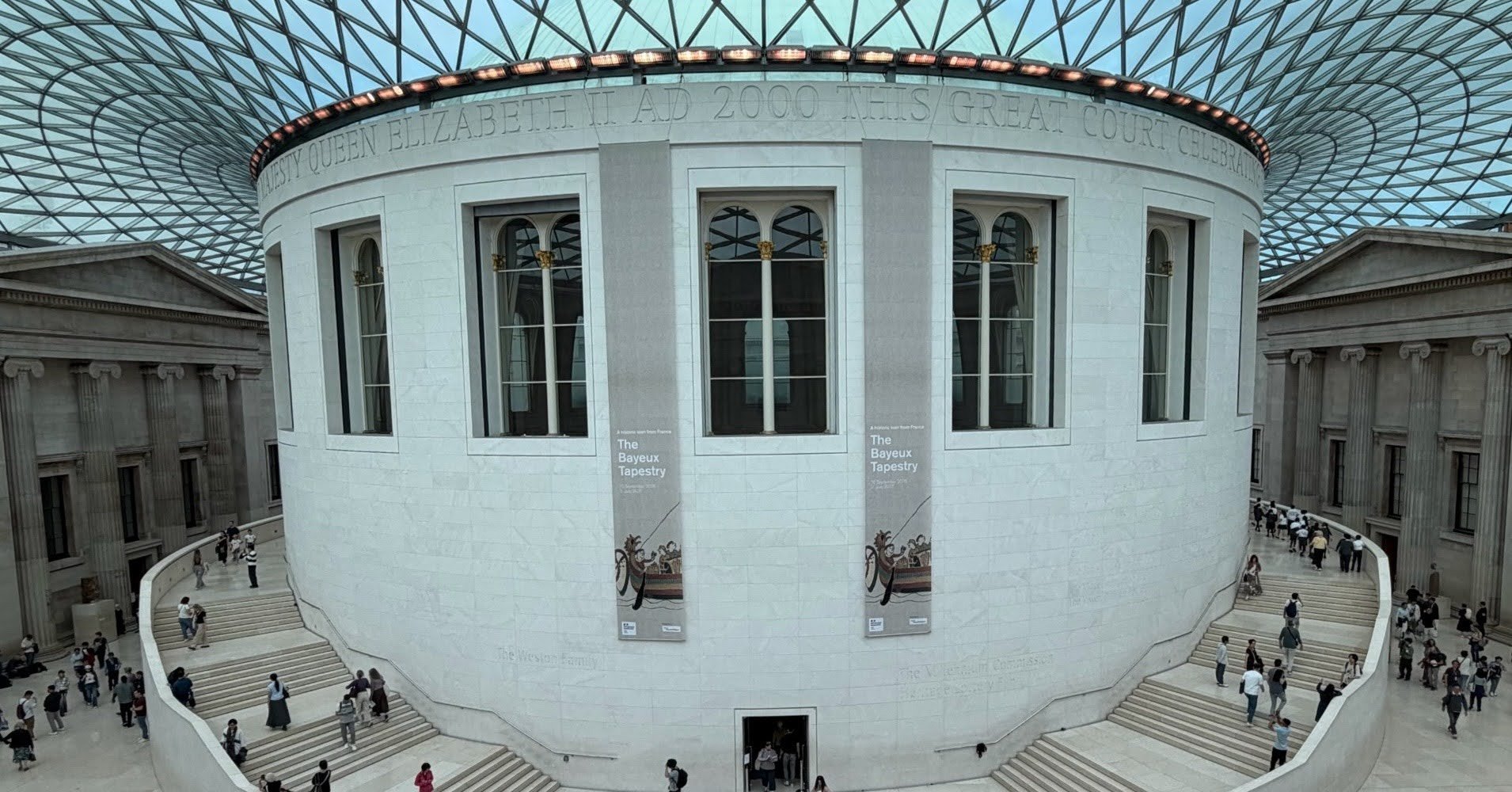
2026 is a demanding year for the British Museum, with landmark exhibitions, major fundraising, and continued building work all happening together. Alongside two major exhibitions, they're holding the second edition of their flagship gala, and continuing to oversee major renovation. The Western Range renovation will be the largest phase of The British Museum's Masterplan and a multi-year rethink of around a third of its gallery space.
Four major programs, each with its own people, systems, spaces, and data to keep track of, all running at once while the museum still opens to the public every day. In a complex national institution with wide-ranging digital and operational needs, the scale of parallel activity makes reliable, well-structured information about the technology estate essential rather than a nice-to-have.
Breaking Down Knowledge Silos and Creating a Sustainable Source of Truth
With responsibility for the British Museum's technology estate, Information Services identified the need for a clear and holistic representation of the technological enterprise. The objective was to support strategic planning, solution development, and operational management, while enhancing communication with stakeholders, promoting consistent documentation standards, and creating a more sustainable approach to knowledge management across the department.
The museum adopted Ardoq, but the early state was raw. When Leigh Joslin joined as Knowledge Manager around three and a half years ago, the museum had already gathered long lists of applications, databases, and servers, but the connections between them were largely missing. The version of Ardoq they were using then also had a steep learning curve, which meant that, in practice, only a specialist could get answers from it. Requests were funneled through one person, and the platform stayed closed to the colleagues who needed it most.
There was a practical cost to that. Working out the impact and benefits of a proposed technology change meant launching an extensive discovery exercise each time, rediscovering what a system touched and who owned it rather than reading it off a shared record. These efforts were required for any change across the enterprise, from headline exhibitions to scientific research, gallery displays, and day-to-day operations. It was neither scalable nor sustainable for the team to continue with this manual approach.
How The British Museum Used Ardoq
One Technical View of the Whole Estate
Ardoq provides Information Services with a connected view of the Museum's technology landscape. Applications, infrastructure, suppliers, contracts, projects, and ownership information are linked together in a single model, allowing teams to understand relationships and dependencies that would otherwise remain hidden across multiple systems.
The complexity of the Museum estate is reflected in the scope of the support Information Services provides, facilitating technology underpinning collection management, scientific research, conservation, exhibitions, gallery technology, visitor services, membership, fundraising, retail, commercial operations, and corporate functions. Understanding how those systems connect is increasingly important as major programs, exhibitions, and estate-wide transformation projects run alongside the Museum's day-to-day public operations.
Most of this was built the hard way, by crowdsourcing. Rather than importing everything from another tool or a CMDB, Leigh met with teams one by one to understand how things actually worked and connected the records on a case-by-case basis, using Ardoq's API primarily for bulk imports.
Paired Ardoq With Deeper Documentation in SharePoint
Ardoq is not the museum's document store, and it does not try to be. A URL field connects each component directly to its supporting documentation in SharePoint, so a single click of a link opens directly to the relevant location where project and technical records, change logs, floor plans, and directional maps are stored, enabling users to quickly access the information they need without navigating multiple systems or repositories.
A New Ardoq Experience: Cleaner Views and Context for Colleagues Across the Organization
Adoption improved sharply when the new Ardoq experience and homepage arrived in April 2026. The redesigned homepage allows colleagues to land directly into the context that matters most to them. The homepage dashboard gives users both a high-level view of the technology estate and the ability to explore the detail behind it, combining headline figures with visual insights across key areas such as authentication, hosting, strategic importance, cost and service levels. Guidance supports users as they navigate the information, while the application overview makes it easy to move from the wider picture into individual application records.
Viewpoints do a lot of the communicating. Leigh builds curated suites for different teams both inside and outside Information Services, controlling exactly what each view shows to keep it uncluttered. A standard application model for a workplace service platform, such as the Museum's room-booking system, pulls together its departmental and personal owners, its named expert, and the suppliers, projects, contracts, and capabilities associated with it. A separate viewpoint models the automated integration that keeps communication consent aligned between the Museum's membership management and email communications systems, down to the servers and file transfers involved.
Viewpoints tend to resonate immediately with users, often prompting requests to understand how the insight was generated and how it can be shared more broadly. The improved Ardoq experience has made the platform significantly more accessible, making information easier to discover, understand, and consume without requiring specialist knowledge of the platform. As a result, a wider audience can explore and find answers they need, enabling faster, more informed decision-making across the department.
The AI Assistant That Opened Ardoq to Everyone
The single biggest shift in how people use Ardoq came from its AI assistant. The steep learning curve that had kept the platform in specialist hands stopped being a barrier once colleagues could open a window, ask a plain question, and get an accurate answer back. A typical query, such as how many active servers there are and what operating system they run on, now takes moments and returns data people already recognize as their own.
Trust followed use. There was some early reticence toward AI, but because the assistant returns information that is already in Ardoq, familiarity built quickly. Team members assessing whether a new product should come in can now query the estate directly and inform a proposal based on it, rather than having to construct a viewpoint from scratch.
Key Outcomes With Ardoq
1) Colleagues Answer Their Own Questions, and the Bottleneck Is Gone
The clearest change is who can get answers. Where requests once routed through Leigh, colleagues now serve themselves through the AI assistant, which has both widened access and taken manual work off the team.
The AI Assistant has been transformative for our team. It opened Ardoq up to everyone, reduced my manual workload, and enabled colleagues to find answers for themselves.
- Leigh Joslin, Knowledge Manager at The British Museum
2) Faster Change Decisions Without the Long Discovery Exercise
Because what a system touches and who owns it is already modeled, the impact and benefits of a proposed change are read off the model rather than rediscovered each time. The extensive discovery exercise that used to precede a technology change is no longer the starting point, which matters most when several major programs are competing for the same teams and systems at once.
3) Enabling Better Decisions Across the Museum
The value extends beyond Information Services. With information and insights readily accessible in Ardoq, colleagues can quickly find the context they need, understand how systems and services connect, and contribute confidently to projects, programs, and strategic discussions.
It saves us a lot, keeping things together in one place and documented.
- Leigh Joslin, Knowledge Manager at The British Museum
The value of the British Museum's shared view in Ardoq is felt in everything from day-to-day operations to the museum's biggest efforts. Delivering a major exhibition is a museum-wide undertaking involving numerous specialist systems and teams across multiple departments. Ardoq provides a reliable technical perspective of the estate, including gallery technology, so the IS team knows what exists, who owns it, and what depends on what. That picture is what empowers them to contribute quickly and confidently to whatever is in flight.
For the British Museum, the value of Ardoq is not simply in documenting technology. It is in making knowledge accessible, reusable and actionable. As the Museum continues to evolve its estate, support major transformation programmes and enable new ways of working, having a shared understanding of how technology fits together helps Information Services make better decisions and support the institution's mission with confidence.
Leigh's Advice to Knowledge and Information Leaders
A connected view of the enterprise turns information into understanding. Once stakeholders can see how everything fits together, they gain confidence in the data and want to expand the picture further.
- Leigh Joslin, Knowledge Manager at The British Museum
For anyone trying to get a technical model adopted across a large, non-specialist organization, especially one without a dedicated EA team, Leigh's experience points less to the tool and more to the practice around it. The early foundational work was grueling but necessary, engaging teams on a week-by-week rotation and running sessions to show them how to find and use what they needed.
The turning point was rarely a feature on its own. It was letting people build something themselves, watching it come together, and seeing the result. Pairing that hands-on approach with a homepage that surfaces the useful things up front and an AI assistant that answers plain questions lowered the barrier enough that the model started widening on its own.
Wider Contributors, Confidential Fields, and Cyber Essentials
Over the next 12 months, the focus is to make Ardoq both more widely maintained and more directly useful across the museum. The team wants to invite system owners and named experts to update their own information, so knowledge stays close to the people who know it best, and to extend its work on capabilities with new list fields and tagging around technology-function categories, which will sharpen search and make rationalization decisions easier. Wider adoption will depend on continued improvements to role-based access and field-level confidentiality, enabling more colleagues to contribute while ensuring sensitive information remains appropriately protected.
Ardoq supports evidence gathering and technology visibility activities that contribute to Cyber Essentials preparation. The assessment requires a reliable view of systems, infrastructure, ownership, lifecycle status, and supporting documentation, and Ardoq presents this information visually.AI is also where the team sees room to go further. Leigh has trialed an early MCP integration that connected, and an Ardoq-to-Copilot link is a possible next step as Copilot is tightly integrated across their environment.
About The British Museum
The British Museum in Bloomsbury, London, is the world's first national public museum, opened in 1759 and free to enter, held in trust for the nation and the world. It cares for a collection of around 8 million objects spanning some 2 million years of human history across six continents, and welcomes roughly 6 million visitors a year. A national museum and public body sponsored by DCMS and governed by a Board of Trustees, it employs around 1,000 staff across curatorial, conservation, research, and visitor teams, and lends and tours objects to partners across the UK and worldwide.
- Customer Stories HMCTS & PA Consulting: Partners for Better Decisions and Reduced Risk Fast Public Sector Compliance in the UK
- Blog Posts The New Ardoq Experience: A Simpler, Smarter, More Powerful Platform Ardoq and the UK Government: Driving Public Sector Technology Transformation
- Ebooks 4 Business Outcomes With Modern Enterprise Architecture