/Logos/Ardoq/RGB_Ardoq_Logo_Primary_Purple.svg)
2025 was a defining year for Ardoq and for the teams relying on Enterprise Architecture to drive clarity, accelerate transformation, and govern increasingly complex digital landscapes.
While 2024 focused on building foundations for smarter automation and deeper connectivity, 2025 became the year of connected intelligence. We matured those innovations, transforming automation into intelligence, integration into ecosystems, and governance into confidence at scale.
Across twelve months, we nearly doubled our feature velocity. But more importantly, we redefined what an EA platform can be. Every improvement - from AI reasoning to governance enhancements - was designed not simply to increase productivity, but to help enterprises operate with confidence and clarity in a world defined by complexity.
As we look back on the year, one theme becomes clear: 2025 was the year Ardoq moved beyond modeling change to actively orchestrating it.
1. AI-Powered Intelligent Automations
From Helpful Automation to Intelligent, Model-Aware Reasoning
2025 marked a shift in how AI lives within Ardoq. Assisting features have evolved to become a deeper intelligence layer that understands the enterprise - not just your data, but the relationships, dependencies, processes, and decisions behind it.
AI Gateway (MCP Server)
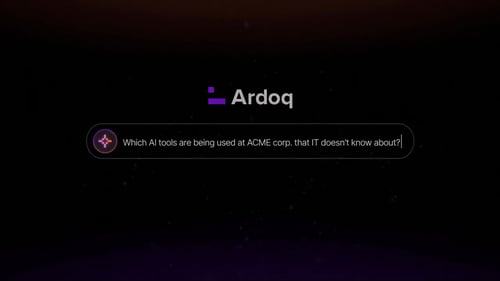
Much of this came from strengthening Ardoq’s reasoning capabilities. With AI Gateway (MCP server) and conversational querying, teams can ask architectural questions in natural language and receive grounded, model-aware answers. Instead of sifting through dashboards or building complex queries, a leader can now ask: “Which applications should we consider for rationalization and why?” and get a response backed by live dependencies, ownership, usage, and business value.
Natural-Language Advanced Search and Chat With Ardoq (Beta)
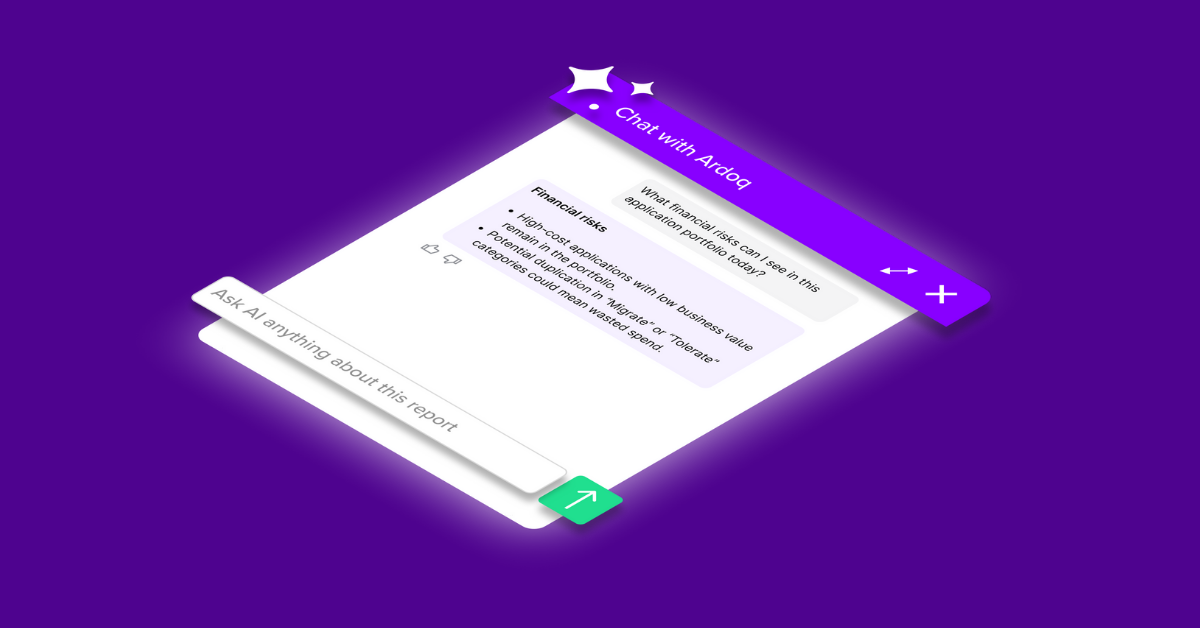
Natural-Language Advanced Search (beta) and Chat with Ardoq (beta) allow users to build complex queries or explore architecture through conversation. No syntax. No training. Just intent expressed in plain language, instantly translated into precise, contextual insight. It’s a new way of working, one where the model becomes as easy to explore as talking to a colleague.
AI-Powered Process Modeling With ShiftX
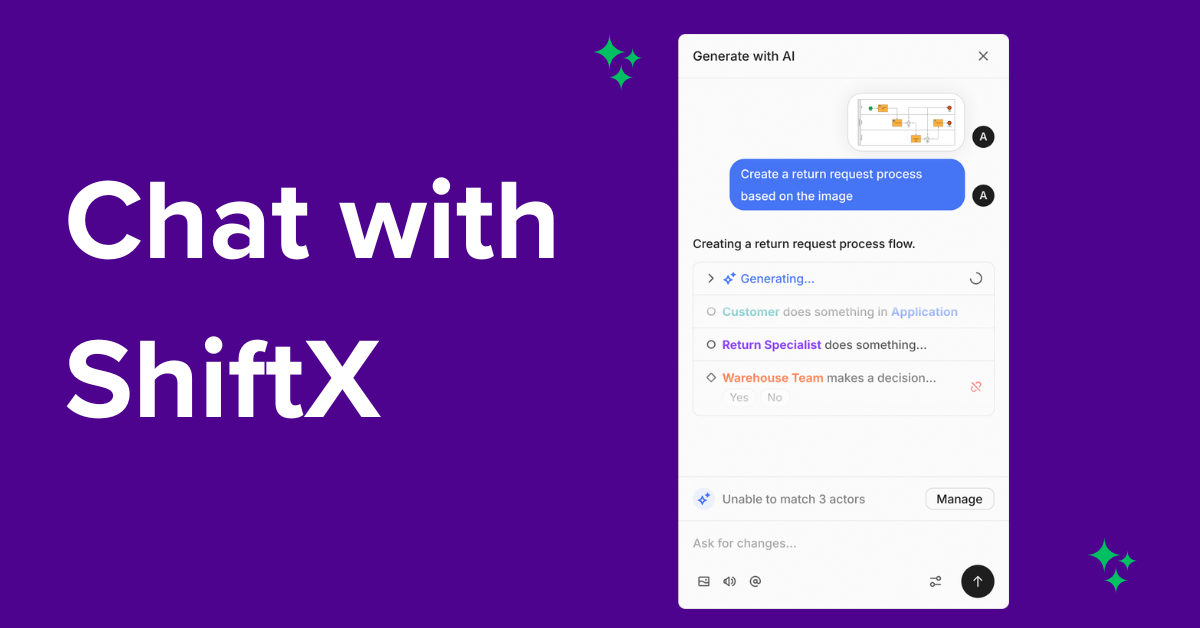 With the native embedding of ShiftX into the Ardoq platform, we've bridged architecture and process modeling.
ShiftX introduced a radically faster way to create and refine processes. Instead of diagramming step by step, teams describe how work flows - and AI drafts the process instantly. Inline refinement, suggested actors, and contextual cues make iteration natural and conversational. Features like the predecessor process view and streamlined editing tools anchored this experience, ensuring processes evolve as intuitively as the discussions that shape them.
The result is more than just faster modeling - it’s a unified, AI-supported view of how systems, people, and operations intersect. A bridge between strategy, architecture, and execution.
Accelerated Modeling
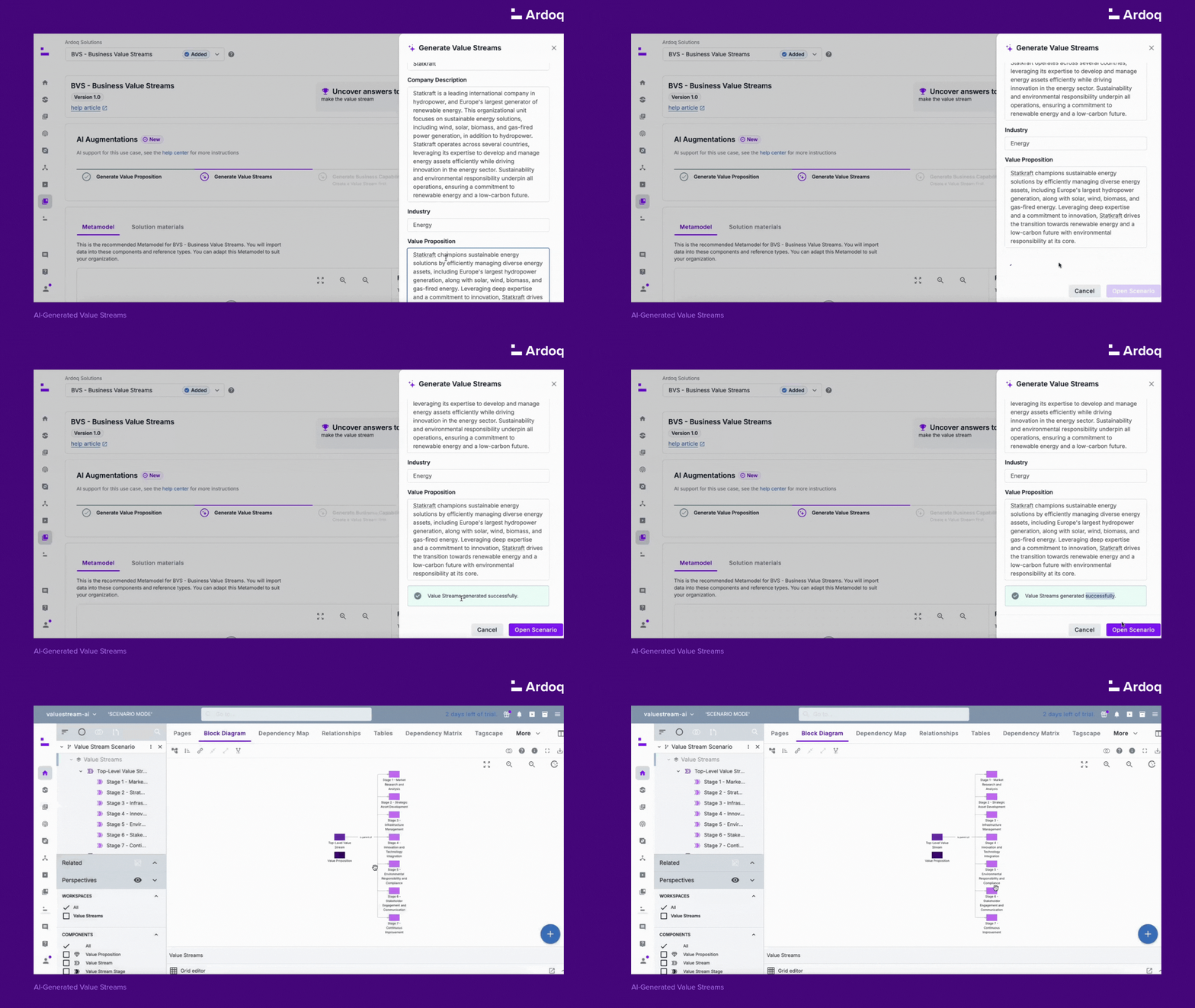
This year, AI also accelerated other core modeling tasks. Value Streams and Capability Models can now be generated automatically based on your organization’s context, giving teams structured starting points in minutes instead of days. Soon we’ll also be launching an enhanced AI Visual Importer that can turn sketches, PDFs, and whiteboard drawings into live, connected architecture.
With all these enhancements, we can proudly say that AI in Ardoq is no longer something you simply use, it’s something that works alongside you.
2. Connected Ecosystems, Enhanced Integrations
Integrations That Connect More Systems, More Data, and More Decisions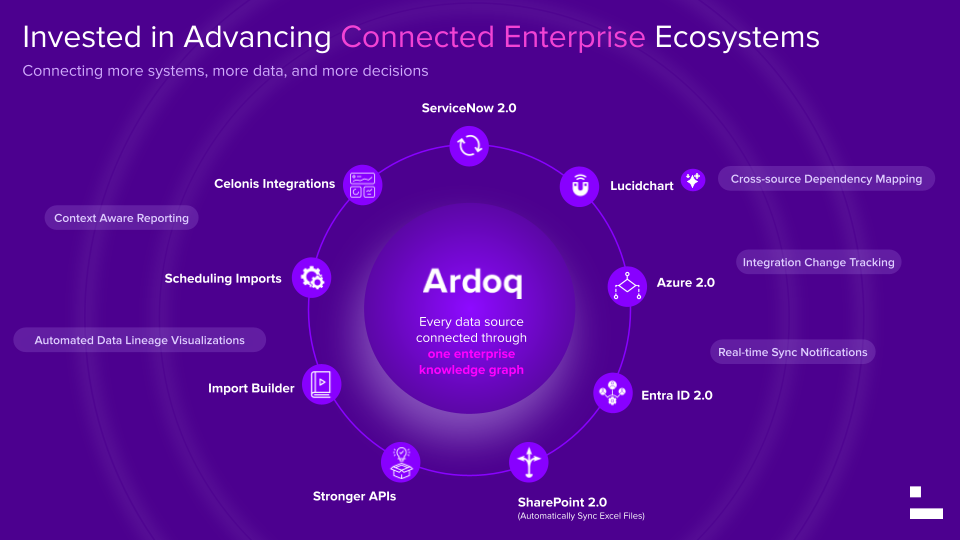
A modern architecture platform must integrate seamlessly with the tools organizations rely on every day. This year, we delivered our most ambitious integration roadmap yet.
Lucidchart Integration
The Lucidchart integration bridged creative diagramming with structured modeling, allowing teams to design visually and import that thinking directly into Ardoq as actionable, connected data.
Enhancements to Existing Integrations
Improvements to ServiceNow and Azure integrations enabled cleaner, more reliable synchronization at scale. For large enterprises, this meant fewer manual reconciliations, faster updates, and a closer alignment between operational systems and architectural insight.
Celonis Process Management Integration
One of this year’s most transformative additions is the Celonis Process Management integration (coming soon), bringing real process execution data into architectural context. Organizations can now connect how processes actually run with the systems, capabilities, and decisions that support them, unlocking deeper insights into efficiency, resilience, and transformation opportunities.
Import Builder (Beta)
For teams with unique data sources or internal systems, the Import Builder (coming soon) introduces a new level of autonomy. For the first time, teams will be able to bring external data into Ardoq through a visual, no-code interface - previewing API data, selecting fields, and creating import flows without writing a single line of code. This opens the door to fully bespoke integrations and a richer, more complete enterprise view.
3. Human-Centered Experiences
Empowering Every Role With Easy to Find, Context-Aware Insights
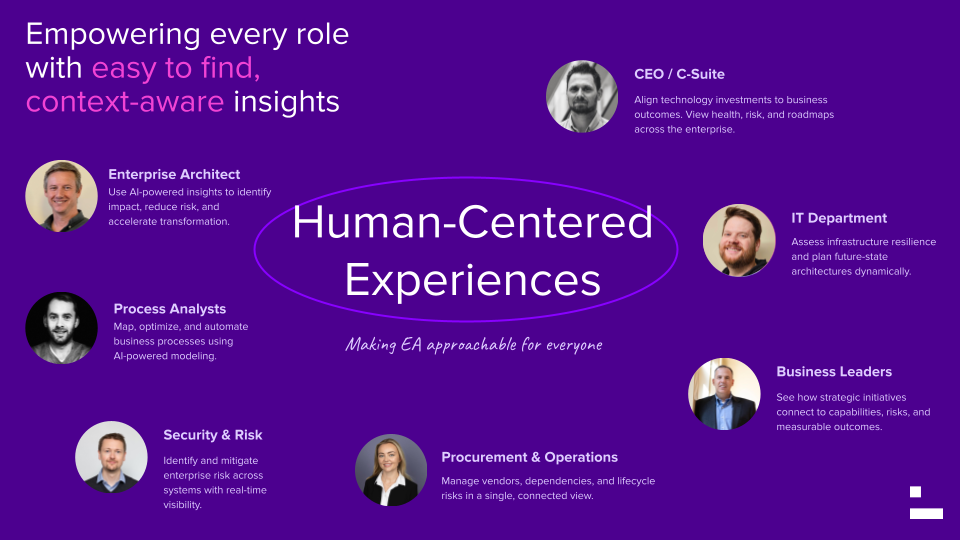
Architecture becomes truly valuable when it’s accessible - not just to specialists, but to everyone who relies on it to make decisions. In 2025, we took some of our most meaningful steps toward removing friction and unifying how people interact with Ardoq.
Enhanced Dashboards and Reports
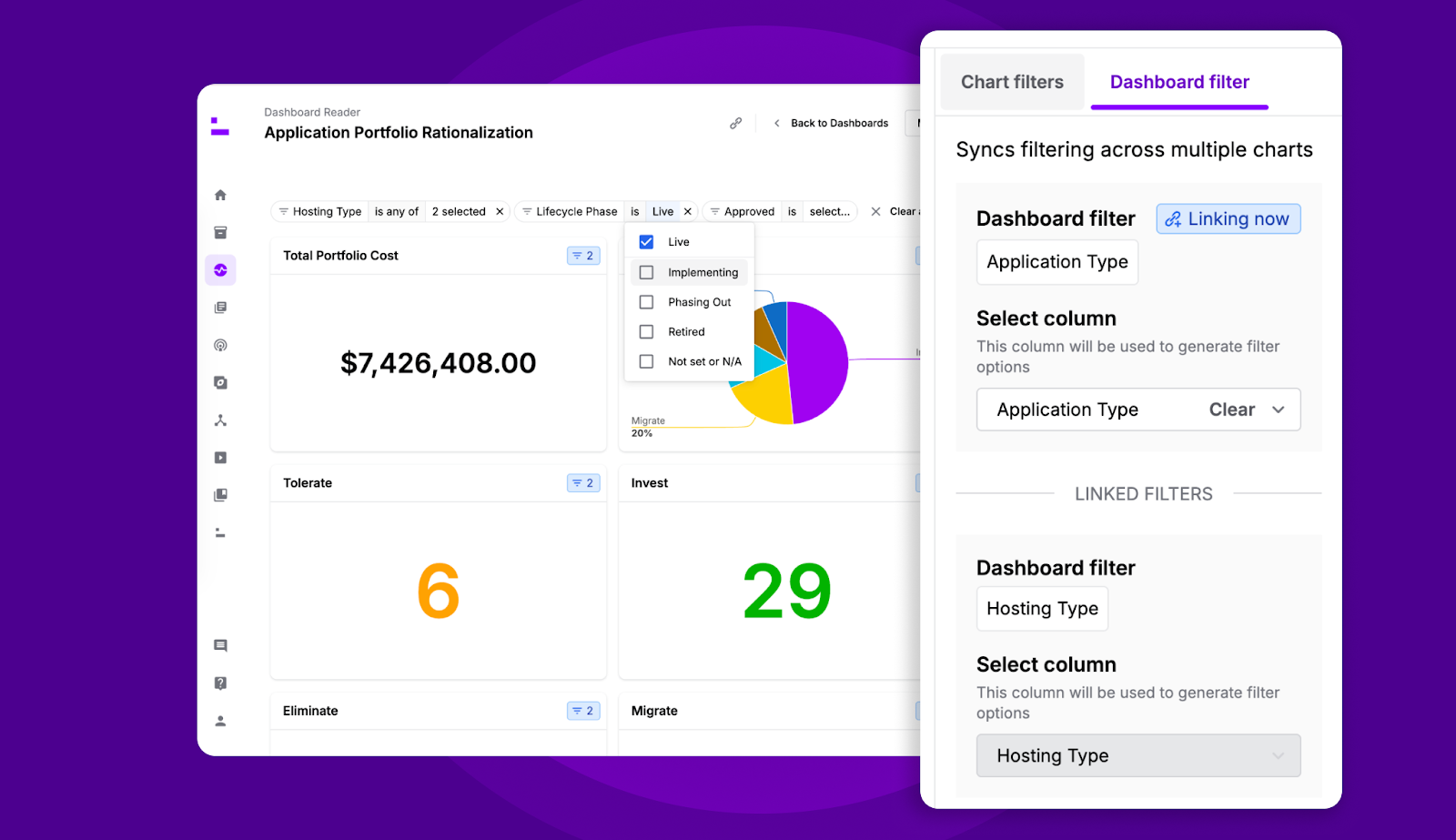
Dashboards and reports evolved into even more dynamic decision tools that adapt to context. Inline editing in reports makes data upkeep faster and more collaborative, while shareable filtered links allow stakeholders to jump straight into the exact slices of information that matter to them. With more mature filtering options, a single dashboard now serves dozens of audiences, adapting to each user’s context without duplication.
A New Ardoq Discover Experience (Beta)
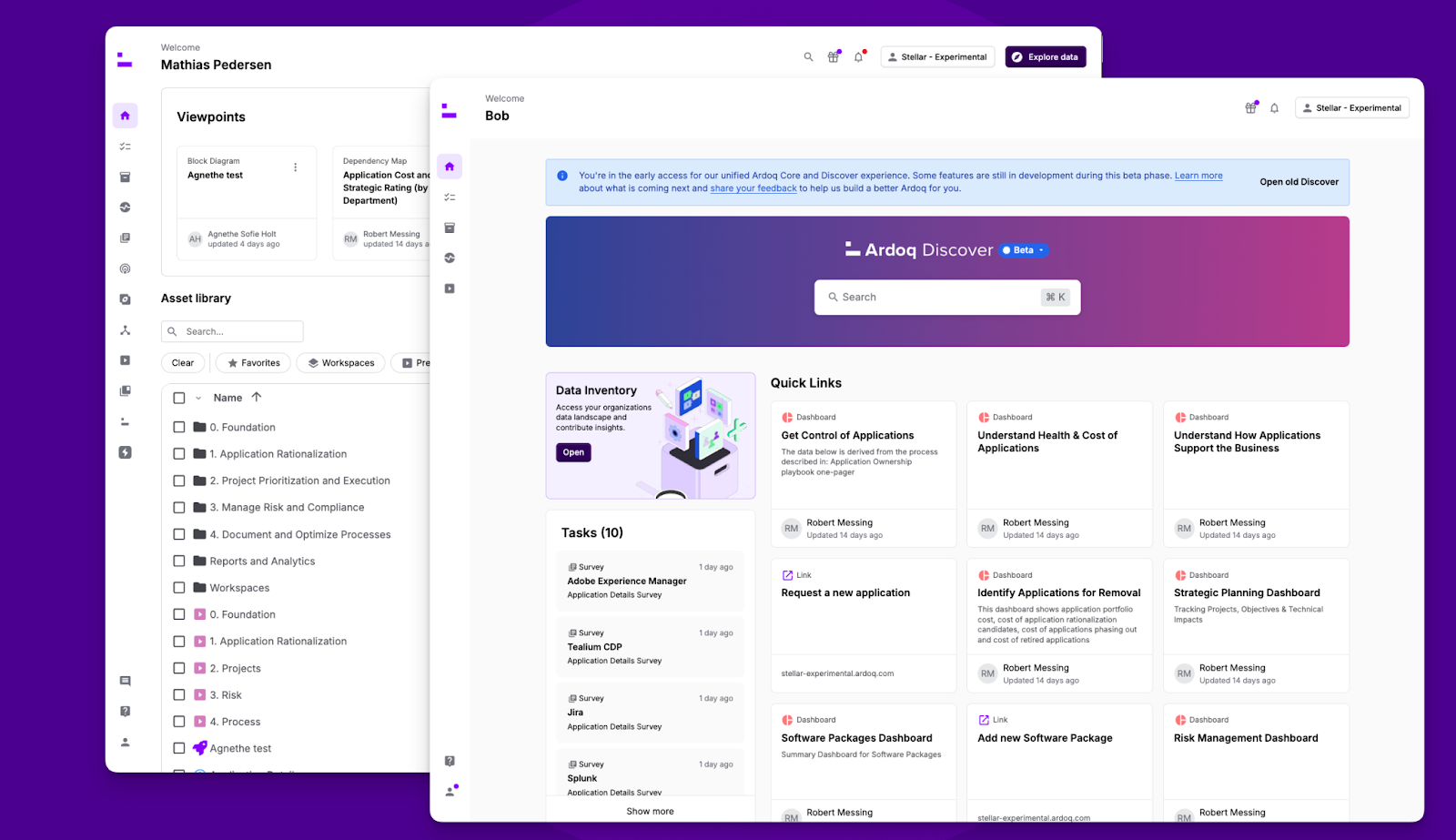
A major step forward was the unification of Ardoq Discover and Ardoq Core. For years, Ardoq Discover offered business users a clear, approachable way to consume insights, but living separately from Ardoq Core introduced some friction and inconsistencies. In 2025, we began merging these experiences, with the first capabilities now available in beta. Early testers are already experiencing the benefits of a unified permission model, consistent viewpoints, and smoother navigation, making business user adoption simpler and more intuitive.
An Actionable Component Overview Page (beta)
 The new Component Overview Page (beta coming soon) is also going to transform how people interact with data. What was once a static information page will be an actionable touchpoint. Inline editing, smarter reference creation, and a unified experience across views, search, and editing allow users not only to see the data but to act on it directly in context. It brings structure and action together, helping teams keep information accurate without breaking their flow.
Together, these improvements reflect a core principle that guided our work this year: technology should adapt to people, not the other way around.
4. Enterprise-Grade Scalability
Building for the World's Most Complex Enterprises
For many organizations, growth brings fragmentation - more systems, more data, more stakeholders, more risk. In 2025, we focused on strengthening the foundation that allows architecture to scale without sacrificing control or visibility.
Streamlined Permission Management
.png?width=1920&height=1080&name=July%20Newsletter%20Images%20(5).png)
Permission management became simpler, faster, and far more transparent. With the new unified access overview, administrators can clearly understand who can see what across every workspace and asset. This centralized view makes it effortless to review permissions, audit access, and update roles in seconds. It’s a modest release on the surface, but one with outsized impact: fewer blind spots, stronger governance, and a platform that grows with the organization, not against it.
Approval-Driven Data Governance
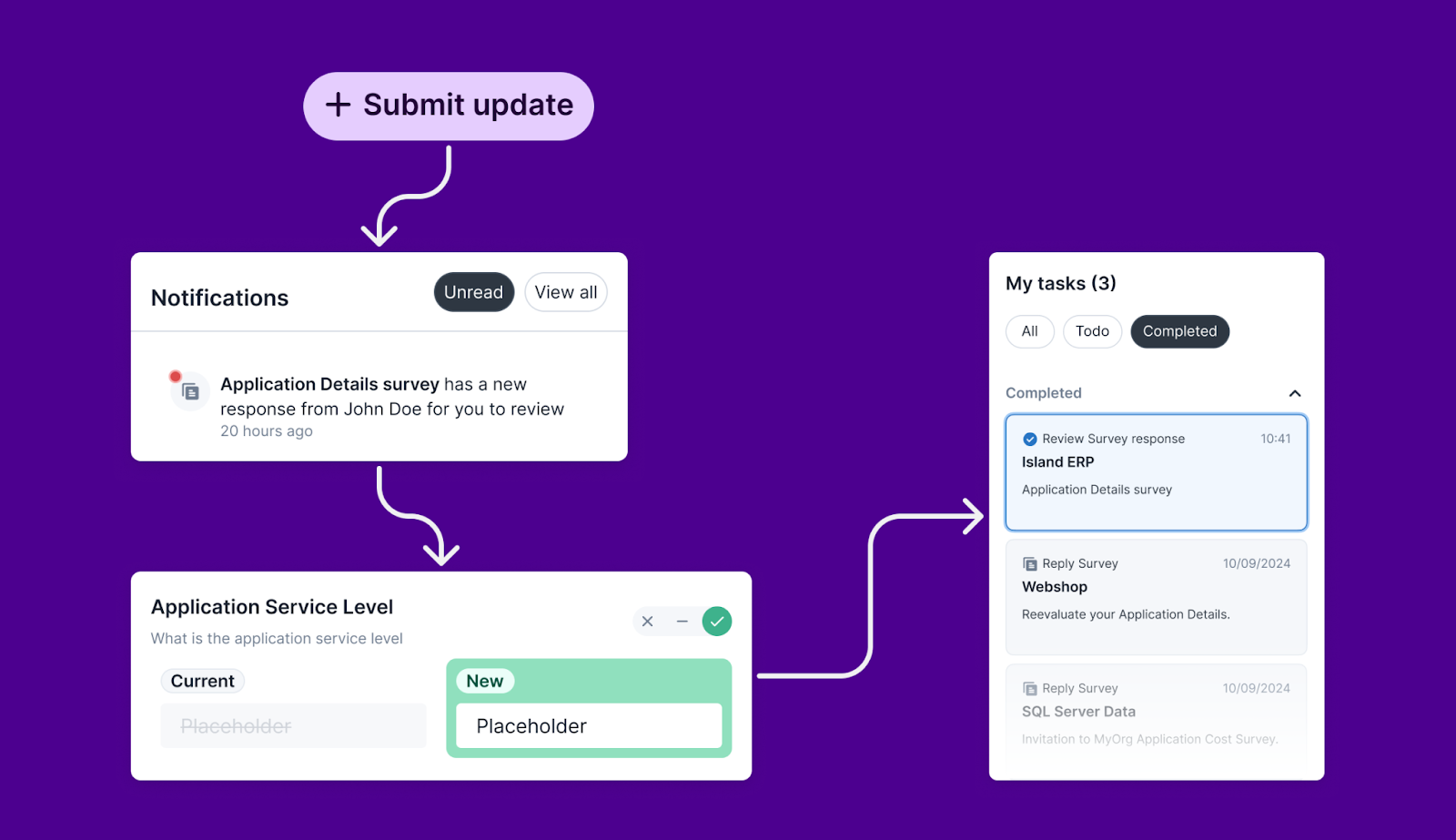 We also addressed a challenge many teams face when democratizing data collection: collaboration that unintentionally compromises data quality. With Survey Response Approvals, critical updates now reach the right owners for validation before entering the system. This keeps data high-quality and trustworthy at scale, without slowing teams down.
Unlock Efficient Data Management
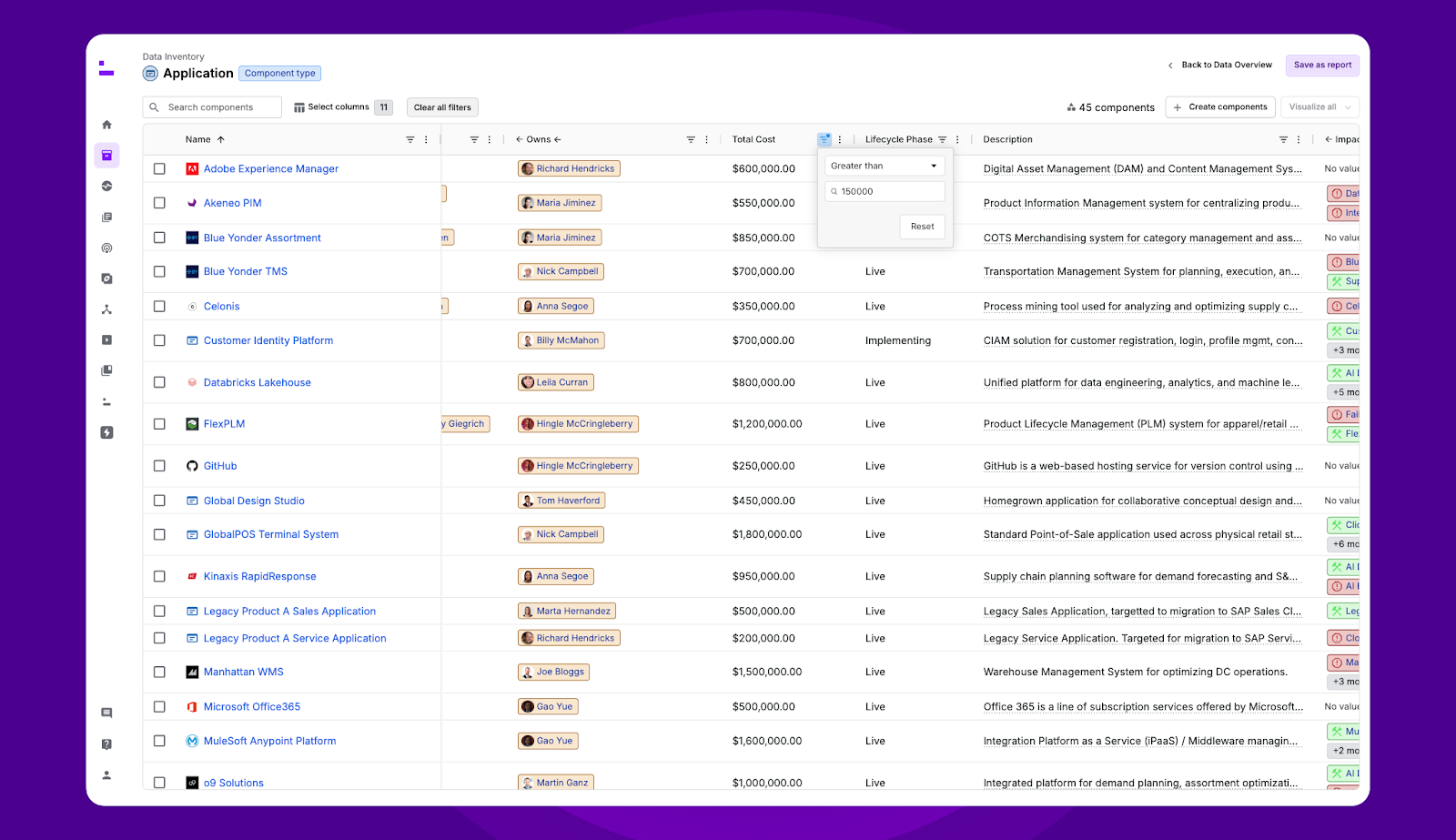
As architectures grow, so does the complexity of managing the data behind them. Early in the year, many teams shared the same frustration: data was scattered everywhere. Finding it took too many clicks. Updating it required too many steps. Reporting demanded too many workarounds. The launch of Data Inventory brought these journeys together. Teams can now browse, edit, validate, and report on their data from a single, unified interface, designed for large datasets and intuitive enough for users of any technical background.
Take Control of Your Metamodel
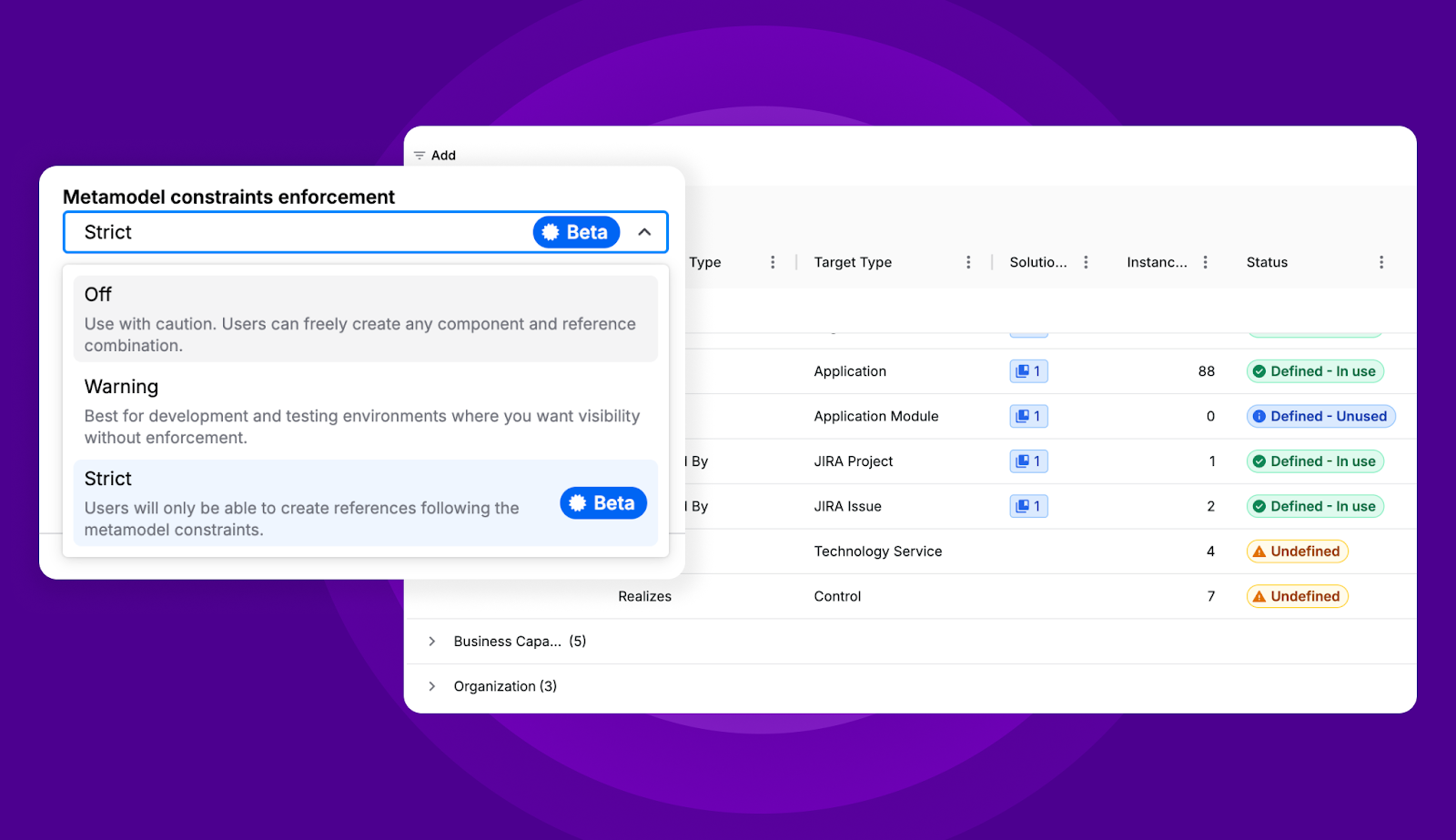
To reinforce quality at the core, we strengthen the structure and security of the enterprise metamodel itself. Metamodel constraints help EA teams protect the integrity of their design, guiding contributors with warnings or enforcing strict rules to prevent accidental drift. For organizations managing hundreds of editors or intricate models, this safeguard is essential.
Together with ongoing performance optimizations, these improvements reflect a broader truth about Ardoq in 2025: scaling isn’t just about size. It’s about stability, security, and quality - the pillars that make enterprise architecture resilient as it grows.
5. Turning Insight Into Actionable Outcomes With Solutions
Across industries, organizations are asking architecture to do more - to guide decisions, reduce risk, and accelerate transformation. In 2025, our solutions portfolio grew faster than ever, with eight new solutions designed to bring clarity, alignment, and action to the most complex areas of enterprise change.
AI Lens
A standout addition was AI Lens, created to help enterprises take control of rapidly expanding AI initiatives. As organizations experiment with generative AI, many struggle to understand where AI is being used, what risks it introduces, and how it aligns to strategy. AI Lens brings all of this into a single, governed view - connecting AI use cases, systems, risks, controls, and business impact into a model that leaders can trust.
Regulatory Compliance
We also introduced the Regulatory Compliance solution, transforming how organizations handle frameworks like DORA and NIS2. By embedding regulatory requirements directly into the architecture, teams gain continuous traceability - from policies to capabilities, applications, processes, and controls - making compliance clearer, faster, and always audit-ready.
Business Value Streams
This year also strengthened the way organizations understand value creation with the evolution of Business Value Streams. New AI-assisted modeling accelerates how teams map value flows, connect them to capabilities and systems, and uncover bottlenecks.
Together, these solutions represent a step-change in how teams use Ardoq - moving from visibility to impact and from static documentation to guided, outcome-driven transformation.
Thank You for Being Part of This Year of Transformation
2025 was a remarkable year. Not just for what we delivered, but for how our customers shaped it. Every idea shared, every interview, and every conversation guided the direction of the platform.
Ardoq is becoming more scalable, more intuitive, more intelligent, and more human because of you.
As we look to 2026, the vision becomes even clearer: A platform that doesn’t just reflect the enterprise, but actively helps run it.
Thank you for being part of this journey. We can’t wait to show you what’s next.
See Ardoq’s Enhancements in Action
Watch the Q4 Release Review Webinar on-demand to see these features in action and hear directly from our product experts.

/Logos/Ardoq/RGB_Ardoq_Logo_Stacked_White_Monochrome%201.png?width=80&height=77&name=RGB_Ardoq_Logo_Stacked_White_Monochrome%201.png)