Your Disaster Recovery Plans Exist. Does It Actually Work?

Connect every application to its recovery plan. Surface gaps automatically. Prove it to regulators

disaster-recovery-hero

WHAT IS IT AND WHO IS IT FOR?Most Organizations Have IT Disaster Recovery (DR) Plans. Few Have DR Knowledge.

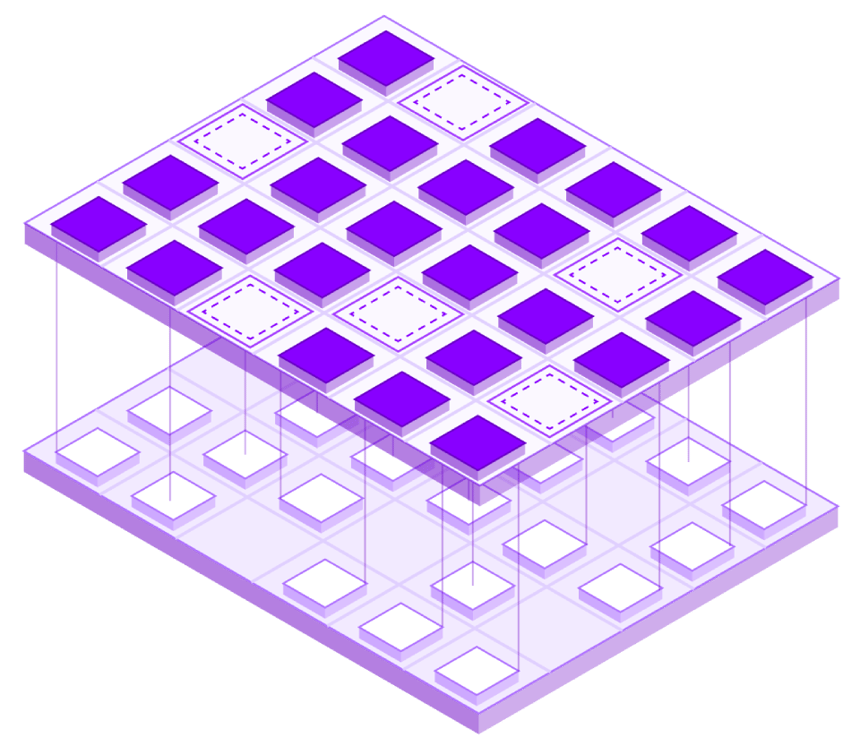
Ardoq's IT Disaster Recovery Solution treats recovery planning as architecture, not documentation. It connects every application to its DR Plan, DR Impact Assessment, and Technology Service dependencies inside a single governed model. Coverage gaps, tolerance breaches, and ownership gaps surface automatically. Regulatory evidence is always ready.

Unknown
Coverage

No way to answer 'which applications have tested, approved DR plans?' without a manual audit. Coverage is unknown, not measured.

Targets Don't Match Tolerances

RTO/RPO targets exist in isolation — never compared to MTPD or leadership-approved Impact Tolerance. The gap is invisible.

Manual Evidence
Assembly

DORA, CPS 230, ISO 22301, and Basel Committee require documented DR capability. Most organizations produce this via spreadsheets and screenshots.

dr-coverage

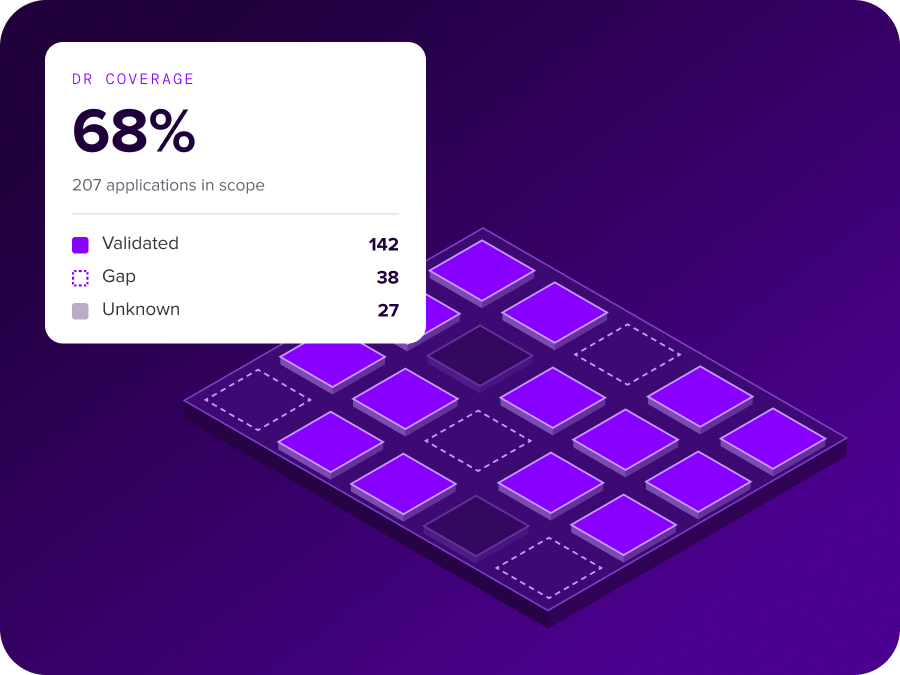
Coverage You Can Measure, Not Estimate

Ardoq auto-calculates DR gap status across every application in your portfolio — no spreadsheet, no manual audit.

OpRes Service Gap Status auto-calculates three states:

✅ Validated: Within Tolerance
⚠️ Gap: Exceeds Tolerance
❓ Unknown: Not Validated

Applications without plans surface as coverage gaps. Untested plans surface automatically. No configuration required.

recovery-gap

Link Technical Targets to Business Tolerances

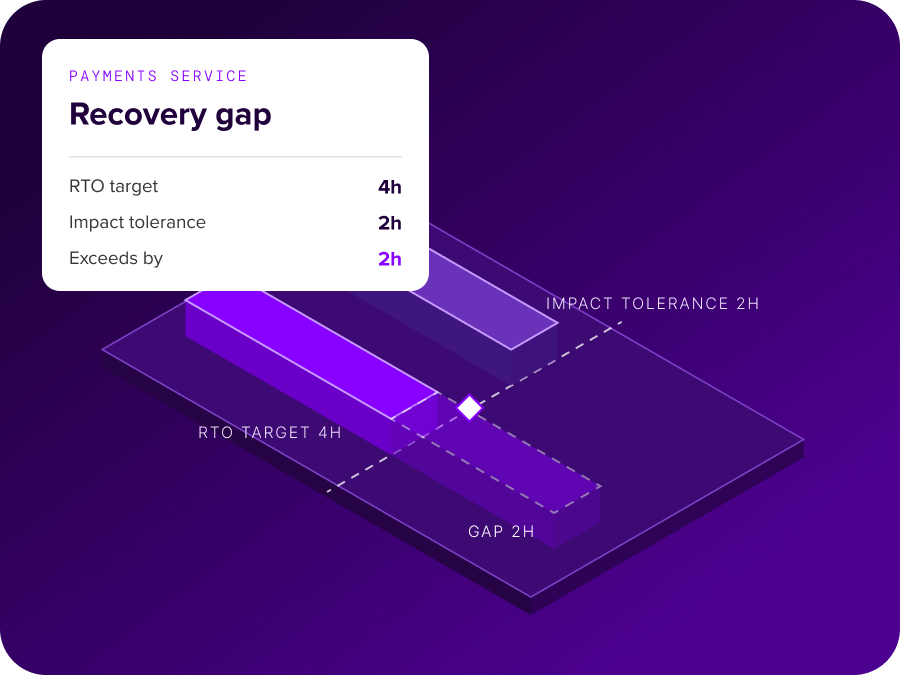
RTO and RPO mean nothing in isolation. Ardoq connects each DR Plan to a DR Impact Assessment — comparing technical recovery objectives against leadership-approved MTPD and Impact Tolerance.

The gap is calculated automatically in and showcased in the DR Dashboard. When targets exceed tolerances, the model flags it — before regulators or incidents do it for you.

blast-radius-analysis

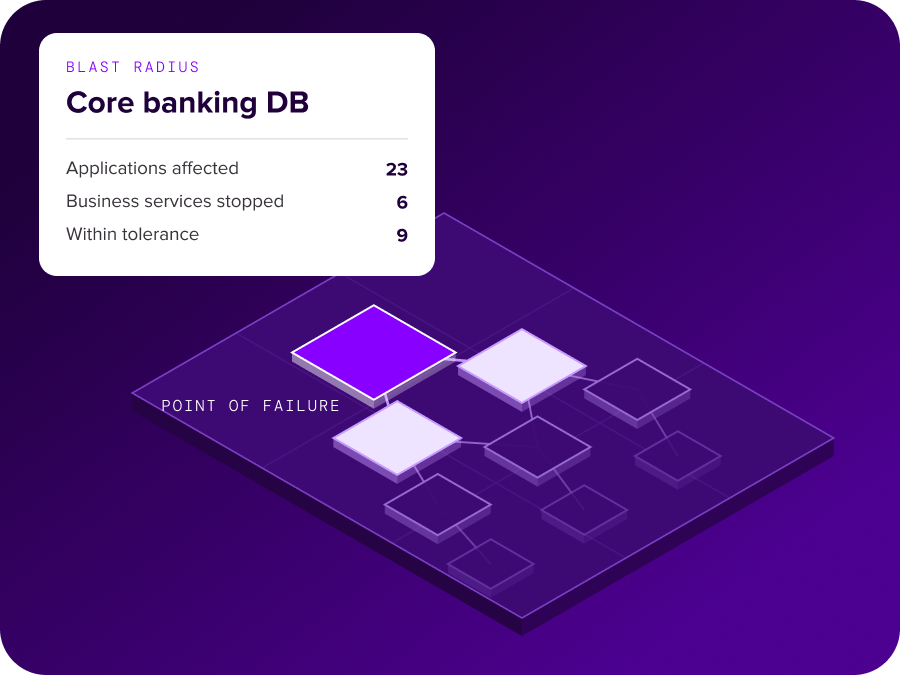
Blast Radius Analysis From Your Living Architecture

Application → Technology Service relationships power instant blast-radius analysis. See exactly which infrastructure dependencies cascade into which applications.

Recovery prioritisation and sequencing flows from live, always-current data — not a CMDB nobody fully trusts.

evidence-pack

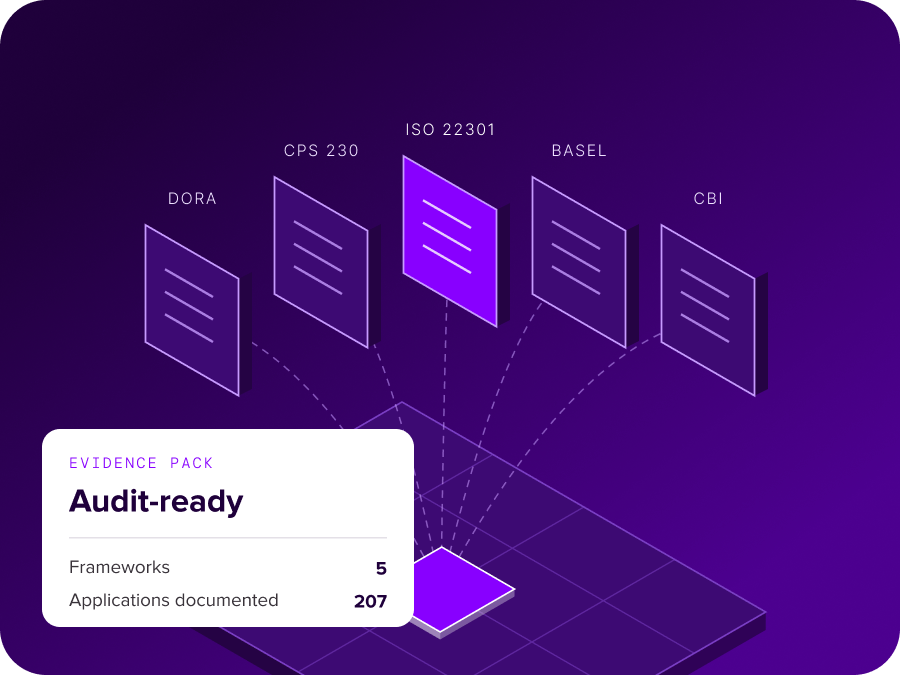
Structured Evidence for Five Regulatory Frameworks and More

When an audit cycle starts, evidence is already assembled — not built from spreadsheets and screenshots.

built-for-architects

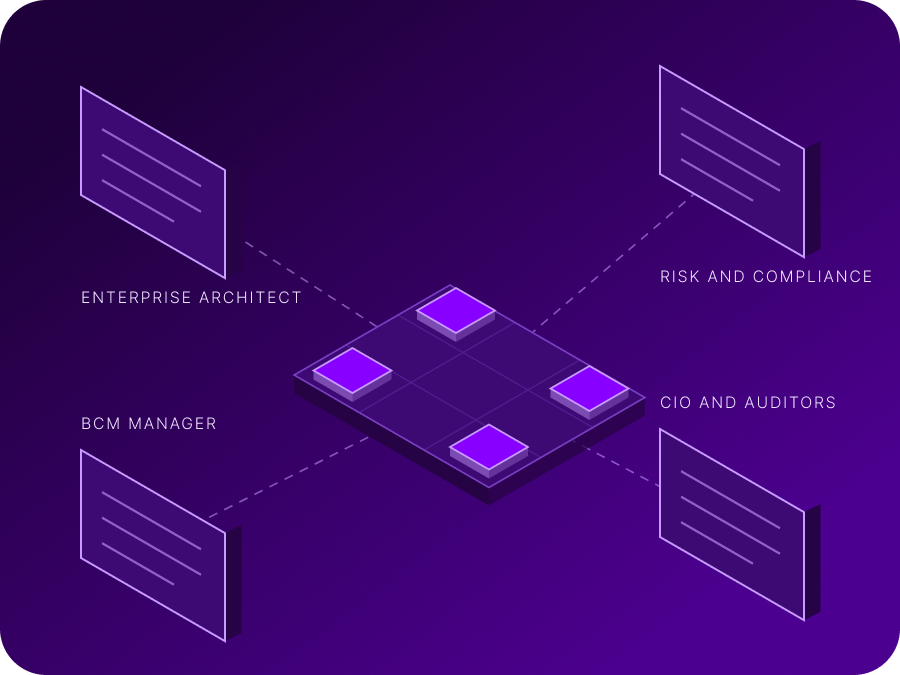
Built for Architects. Trusted by Risk, Compliance, and Leadership.

Pre-built, out-of-box solution from industry-leading EA experts, so you don't start from scratch.

Every stakeholder in your resilience program gets a shared, structured, always-current view of DR posture.

EAs own the model. BCM Managers use it. CIOs trust it. Auditors accept it.

COMPARISONWhy Ardoq IT Disaster Recovery Solution Beats Traditional Approaches

From spreadsheets to ITSM tools — here's what only Ardoq delivers.

Capability Ardoq Spreadsheets ITSM Tools
Auto-calculated DR coverage & gap status icon
icon
icon
Technical RTO/RPO vs. business impact tolerance icon
icon
icon
Blast radius & dependency chain analysis icon
icon
Partial
Structured regulatory evidence (DORA, CPS 230, ISO 22301) icon
icon
icon
Out-of-box workspaces, fields & gap status logic icon
icon
icon
Links to living enterprise architecture graph icon
icon
icon
Frequently Asked Questions (FAQs)

Ardoq's IT Disaster Recovery Solution is an EA-native platform that connects every application to its DR Plan, DR Impact Assessment, and Technology Service dependencies in a single governed model. It auto-calculates whether technical RTO/RPO targets meet business impact tolerances, surfaces untested and orphaned plans, and produces structured regulatory evidence for DORA, CPS 230, ISO 22301, Basel Committee, and Central Bank of Ireland frameworks.

The solution structures DR documentation as architecture-backed evidence — not spreadsheets. Coverage, ownership, test history, and gap status are all queryable, so regulatory evidence is produced as a report rather than assembled by hand. The model directly addresses ICT continuity and resilience requirements in DORA Article 11, APRA CPS 230, ISO 22301, Basel Committee Operational Resilience Principles, and CBI Cross-Industry Guidance.

ServiceNow manages incidents and configuration items. It doesn't connect technical recovery targets to business impact tolerances or auto-calculate gap status. Ardoq gives your BCM and EA teams the 'does our plan actually meet our business's threshold?' layer. It also delivers business-level blast-radius analysis — not just 'which CI is down', but 'which business processes stop'. The two tools complement each other.

Primary users are Enterprise Architects and Business Continuity Managers who own the application model and recovery plans. Primary buyers are CIOs and CISOs accountable for DR obligations and regulatory posture. Compliance, Audit, and Leadership teams use the reporting outputs to approve Impact Tolerances and satisfy regulatory evidence requirements.

No. The solution is designed to work with imperfect data. Survey-driven data collection lets you govern the improvement process from day one. Organizations using this approach have reached 85%+ DR metadata coverage across 200+ application owners within weeks. You start with a governed process to improve data — not a requirement to have clean data before you begin.

Ask your account rep or CSM about enabling the IT Disaster Recovery solution on your existing Ardoq license. It uses component types you already have (Applications, Processes) — the DR metamodel is an extension, not a new platform. If you're not yet an Ardoq customer, click Book a Demo to see how the solution delivers measurable value in your environment.